Showing posts with label maine. Show all posts

Wednesday, August 16, 2017

Travel: Bar Harbor - Gateway to Outdoor Adventure

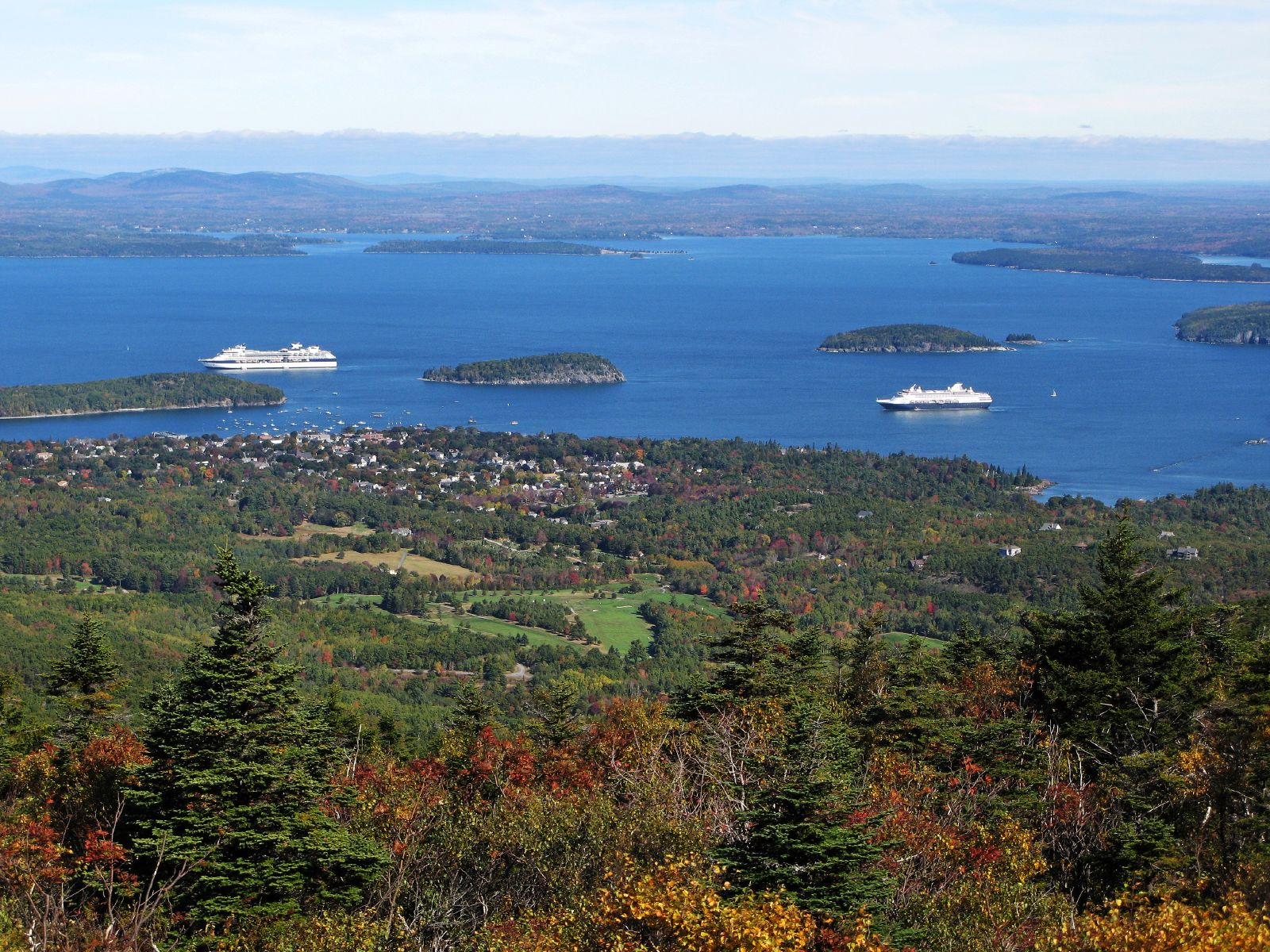
Bar Harbor, Maine and the surrounding geography are too big of a subject for one post, so I will likely revisit this subject again in the future. For now, I'd like to focus on the town of Bar Harbor itself, and the many opportunities it presents for folks wanting to kayak the pristine waters of Frenchman Bay or other nearby waters, or to hike, bike, fish, rockclimb, ride on horseback...a near endless list of outdoor activities. 
Bar Harbor, Frenchman Bay, and the Porcupine Islands
Bar Harbor and Frenchman Bay 

Bar Harbor is the largest town (or village, as the case may be) on Mt. Desert (pron. DEsert or deSERT - either way is acceptable) Island. Mt. Desert Island is home to Acadia National Park, the oldest national park east of the Mississippi. There are several areas that permit boating within the park, which should include kayaking. However, these same areas do not necessarily permit paddle boarding, kite surfing, etc. - so double check with park officials before planning an in-park kayaking trip. You will probably want a wheeled kayak cart with all terrain tires to get your 'yak to the launch point, as parking lots are often not immediately adjacent to the water's edge. You may have to travel via a short trail to get to the water. I personally have not yet paddled within park boundaries, but my inclination is that places like Long Pond and Echo Lake would be prime candidates. Outside the park and surrounding Mt. Desert Island are ocean waters including Frenchman Bay, Eastern Bay, and Somes Sound (once considered a fjord, but now called a fjard). These areas offer a multitude of kayaking trip possibilities, from beginner to advanced - so plan your trip relative to your experience level (see my post Where Should I Paddle? - advice on planning your adventure), or consider joining one of the tours offered by the local kayaking tour businesses. 

The town of Bar Harbor, as the largest populated area on the island, is a hub for all island activities. It's a great place to start when planning a trip. Some of the island locals will lament the summertime influx of tourists that can cause traffic back-ups in town and a less than sedate atmosphere. However, they also bring a lot of commerce with them that supports local retail, restaurants, and recreation opportunities. If a touristy atmosphere drives you crazy, consider visiting in the spring, or better yet, the fall - when the town is a bit quieter than during the height of summer. Alternatively, you can stay outside of Bar Harbor and head in to town to join a kayaking tour, hop on a boat, rent bikes, etc. The Island Explorer bus line offers shuttle routes to many areas on the island. Accommodations range from campgrounds to cabins to hotels, and sometimes come with package deals that include recreational activities. Food offerings range from local markets and lobster pounds where you can find excellent products to cook yourself, to roadside casual spots, and all the way to upscale dining. 

The best aspect of Bar Harbor and Mt. Desert Island is the huge variety of things to do, especially in regards to recreation and the outdoors, within a fairly compact geographical area. You can drive across the island in 30-45 minutes, depending on which route you take. The worst part is how long it can take to get there. From my home in northeastern Massachusetts, it's a 6 hour drive if I stick to Rt.95 north to Augusta, then drive east on Rt.3 to Belfast, then coastal Rt.1 north to Ellsworth, then Rt.3 again - this time southeast onto the island. Alternatively, Rt.1 can be driven for a longer stretch with stops available in several of the mid-coast Maine towns like Rockland and Camden. There is an airport, the Hancock County - Bar Harbor Airport, that offers flights via Cape Air, Pen Air, and Jet Blue. I've never used these carriers, so make sure to research flight options thoroughly if this interests you. A location that requires a bit of a journey, even for New Englanders like myself, can be a good thing. It forces you to leave your day to day life behind and encourages you to optimize your visit once you get there. This can result in a memorable trip. Do your research, plan thoroughly, leave some space and time for spontaneous trip alterations, have back-ups in case of inclement weather, give yourself plenty of time to get there...then enjoy. If you haven't been there before, I guarantee you will want to go back. If you have, then you know what I mean. 

For kayak tours (which I recommend for the less experienced - one of my earliest paddles was on one of these) you can find Acadia Kayak Tours, Coastal Kayaking Tours, and Aquaterra Adventures right in Bar Harbor. There are additional kayak touring companies located elsewhere on the island. If you want to paddle independently, you can rent a kayak which can be dropped at a launch point by the rental company. If you bring your own kayak, make sure you have it fully secured for the long drive, that you will be able to park your vehicle comfortably with your kayak(s) loaded, and that you have fully researched the local paddling conditions. Paddling independently in a strange area can be more risky than going on a tour, so talk to the local experts at the rental companies and ask as many questions as you can. Buy a map, if they have one, to compensate them for their advice. Remember, Maine waters are c-c-cold , so wear appropriate clothing (see my post 8 Tips for Dressing Right for Your Kayaking Adventure).


Sand Beach, Acadia National Park
Sand Beach, Acadia from a mountain top

Whether you plan on lazily relaxing in Bar Harbor, paddling the local waters, or climbing a mountain, you will enjoy your visit and marvel at the natural beauty of the place. Acadia National Park is diminutive by the standards of the vast parks of the West, but it is nonetheless remarkable. This area showcases coastal Maine in all its glory, and gives visitors the opportunity to explore its natural wonders, its fresh seafood, its history, and its hospitality - and I haven't yet mentioned the fresh local beer for aficionados (like myself 😋), with brewers like Atlantic Brewing, and Jack Russell's Steak House & Brewery  located right on the island. A cold local beer and some fresh shucked oysters are my little piece of heaven when I'm there.  

Do yourself a favor, if you haven't visited Bar Harbor and Mt. Desert Island, do so as soon as possible. If you have, go back for more. You'll thank me.  

- TB on the Water   


Wednesday, March 15, 2017

Advice: Where Should I Paddle? - advice on planning your adventure

It might seem like an obvious point, but identifying where you're going to paddle your kayak is essential, and can be the single most important aspect affecting the experience you'll have. Aside from the particulars of how you're going to get your kayak to, and in, the water (see my post Which Kayak Should I Buy? ), planning a trip suitable to your equipment, your skill level, who (if anyone) you'll be with, the water and weather conditions, the time needed to complete the journey, etc. is the first step in having a great experience. Don't get me wrong - there have been times when I've put my kayak in at a lesser known launch point, and experienced the adventure of dealing with conditions on the fly. Some of these trips have been a revelation. Others needed to be abandoned in short order. I feel confident (maybe overly confident 😏) in my experience in recognizing safety hazards (see my post Safety is a Mindset ) and other difficulties. I wouldn't recommend "winging it", though, to anyone new to the sport - or, in general, if you can avoid it. Planning your trip can seem like work, but it is also where you can explore your sense of adventure, and anticipate opportunities that might be available.

Instead of listing suggestions on how to plan your trip, I'll describe one that Tim (see An Unexpected Adventure) and I took a few years ago that still stands out in my memory as one of my most enjoyable...

For a short time, many years ago, I lived in Portland, Maine, across from a park (The Eastern Promenade, or "East Prom" satellite view Google Maps) that sits at the shore of Casco Bay. The location of the park, its large parking lot, and both boat ramp and beach access to the water lingered in the back of my mind as a possible launch location, long after I moved away from Portland. Many islands were visible on Google Maps as possible rest/exploration points (including Fort Gorges on a nearby island). There appeared to be coves and other shelters from any challenging conditions we might encounter, and the availability of a route that could "hug" the coastline of larger islands - making a short swim to shore possible in case of an emergency. Also, the larger islands are populated, so communication for emergency help should have been available if needed. Add a stop in the "Old Port" of Portland's downtown for a cold local beer at the end of the trip, and who could resist?   

That being said, Casco Bay is a large body of water, with boat traffic, working fishermen, tankers coming in to Portland, currents unknown to me, and the inevitable surprises that each trip brings. So, I lobbied Tim to come along, which wasn't really a hard sell considering the features I mentioned in the previous paragraph. We launched from the beach at the East Prom on a hot summer day, and paddled across a busy boat lane to take a close-up look at Fort Gorges. I like to plan an early stop, if possible, to assess any gear issues, and to generally make sure I'm feeling good about the location. We both felt confident, there weren't any gear issues, and the weather, though hot, was perfect for a day on the water. And, as it turns out, we could beach the boats for a little while and explore the abandoned fort, have a snack, and spend some time jumping off a short wall into the water below. So far, so good.


The entrance to Fort Gorges, near Portland, Maine in Casco Bay https://cwkayaker.blogspot.com/2017/03/where-should-i-paddle-planning-your.html
Fort Gorges entrance, Casco Bay
A view of the interior of Fort Gorges, near Portland, Maine in Casco Bay https://cwkayaker.blogspot.com/2017/03/where-should-i-paddle-planning-your.html
View of Fort Gorges interior

When we got back in the kayaks, we proceeded past walls of the fort that rise high and straight out of the water, and to the east, where we hugged the southern and eastern shores of Little Diamond Island. Passing the large pier at the southern end of Little Diamond, I logged it in my memory as a location feature ( a breadcrumb, if you will) to look for on our return trip. Being among islands can be disorienting, and can sometimes block the view to your destination. Maps can help, but I tend to use them more for the planning stage, and then use the actual physical characteristics of the area (plus a compass on the front deck of my kayak) to navigate. This strategy also helps keep track of your time - as the return trip should need roughly the same time to execute (providing for currents, wind conditions, and fatigue, of course).

We continued to paddle northeast through Diamond Island pass, past Great Diamond Island, then turned east past Pumpkin Knob and straight out to Overset Island. This is where planning couldn't tell us everything we needed to know. Overset Island, although not far off the coast of the larger and populated Long Island, was much more open to the bay than the previous islands we encountered. The wave actions at its' southern tip was much more like open ocean swell than protected harbor. It was important that we not get too close to it - to avoid any danger of getting tossed onto the rocks, or marooned on a rock top by a retreating wave. Maps can show you only so much, and having experience and a paddle buddy allowed us to continue. Had I been alone, I might have called that the end of my outward journey, and turned back around.

Tim and I discussed our plans at that point, and decided to paddle east to one more island -  Vaill Island. It looked from Overset that Vaill had a little cove with maybe a beach - and I thought I saw a boat anchored there. We paddled over much choppier swell than we had seen inside of Overset Island, and pushed hard to reach the cove. When we got there, we were rewarded with sheltered, calm water and a beach where we could land and take a rest. There was a boat anchored, but aside from the few passengers and their radio, we had the place to ourselves. A nice swim, some bottled water, and a half hour rest prepared us for the return trip. We picked our way back, a step at a time, passing each of the locations we had visited on the way out. There were a couple of times that I didn't recognize where I was headed, but relying on physical markers, my memory of the map from my planning stage, and my compass, we made our way safely back to the East Prom - and ultimately to Old Port bar stools and frosty mugs of suds. 😋

So, what does this tale have to do with planning where to paddle? First, I had seen the launch location and had reviewed its' suitability for a kayak launch. Then, I followed my hunch and consulted Google Maps to plan a route that we mostly stuck to. I noted features of the trip, like Fort Gorges, that could provide further exploration possibilities, and I left the plan flexible enough to accommodate on-the-spot decisions like continuing to Vaill Island from Overset Island. I also planned the most important aspect of this trip - not going alone (at least on the first one in this area). I didn't really talk about gear preparation for this trip (other than noting my compass), but you can read Safety is a Mindset  - and I'll probably publish some gear specific posts in the future. Let me know in the comments if you'd like to see anything specific.  

Remember, planning your trip is the first step in your adventure. Keep your eyes open, in your travels, for launch locations. Look at maps, read blogs and boards, and create a wishlist of paddling trips. Then, assess your skills, gear, experience and possible accomplices and pick a trip that fits. I got into kayaking to explore, and my planning process is just another aspect of that exploration. When I'm doing my research, I can almost see the adventure in my mind. The only thing better is actually paddling it - especially if you planned well. And, don't forget to plan a reward after a hard day paddling. Sitting on a bar stool, drinking a cold beer and eating a burger in the Old Port was the perfect end to one of my best paddle trips.

- TB on the Water      


Wednesday, February 22, 2017

Advice: Safety is a Mindset - 10 Tips for Kayaking Safely

USCG finds a swamped kayak
U.S. Coast Guard approaching a swamped kayak 

Safety, in the end, is a mindset. Preparation, experience, equipment, planning - these can all lead to a safer experience. Given the unknown nature of random events, however, no amount of any of them can avert a potential emergency situation. There are just too many variables. Water sports in general, and kayaking in specific have one major challenge that complicates the safety scenario: water. Humans can't breathe it, can't last for long in it when it's cold, and often aren't strong enough to withstand its power. The biggest challenge in water sports isn't the water, though. It's the human mind, and its inability to properly assess risk (see my post Please, Stop the Kayaking Deaths! (proper risk management)). As the saying goes, "no risk, no reward". Kayaking can be a very rewarding activity, but proper risk assessment can mitigate how risky it can be.

That being said, I have a confession to make. For several years, when I first started kayaking, I could not successfully roll my kayak. I took my 17' Perception Eclipse on many adventures over long distances of cold, open water without one of the most important skills necessary for responsible kayaking. And, I still can't. I'm working on that, but meanwhile, I sold my closed hull/cockpit boat for a sit-on-top designed for touring and expeditions. An SOT specifically designed for that purpose is not easy to find - most are made for fishing, and therefore are wider to provide a more stable platform. I was able to locate a used Heritage Sea Dart (see my post entitled Kayak Repairs That Last ), that I can climb back onto if I get capsized - and I have been required to do just that, once. My Sea Dart is fitted with thigh straps, which I think will allow me to roll this boat with practice. You see, even with an SOT, I still believe that learning to roll is a valuable skill. I mention all of this to demonstrate a key component of proper risk assessment: adaptability. I recognized that I did not have an important skill required for my safety. I am working to acquire that skill, but I took the added measure of removing a cockpit, that can fill with water and submerge my boat, out of the equation. In short, I adapted.

So, here's my list of top safety measures and principals to keep in mind if you kayak, or are thinking about it:


1. Accurately assess your abilities and conditioning. Are you a beginner? Great. Learning a new activity can be a lot of fun. Just make sure you learn correctly and safely. Take a tour with a kayak touring company, read everything you can, watch videos, attend kayak equipment shows and ask lots of questions, take a kayak rolling class at the YMCA. Whatever you do, don't bite off more than you can chew, and by all means, don't paddle alone until you have some experience under your belt. If you're experienced or getting there (like me), don't get cocky. Prepare for the worst. Have a game plan if something goes wrong. And - make sure you're in shape for that multi-mile trip before you go. Maybe you could schedule it for later in the season rather than the first warm day of spring.

2. Wear a PFD (life jacket) always. It may be hot, you may be sweaty, and the water may be calm as glass - but what if you have a medical emergency that causes you to capsize? Add "no life jacket" and that could add up to the last time you paddle or do anything else. Just wear it, make sure it fits correctly (snugly) and is buckled or zipped. It could make all the difference. I've had good performance from a Stohlquist model. GET ONE HERE 

3. Dress for the water temperature, not the air temperature. Every springtime in New England, the heartbreaking stories of kayakers and canoeists who drown after capsizing start to seep into the news feeds. Each time I hear about one, I know what the main culprit was: 70F degrees air temperature with 50F degrees water temperature. Someone fell out of his boat, or was capsized somehow and was not prepared for the cold water (read my post Spring is Back! Plan Accordingly.). The U.S. Coast Guard lists functional disability in cold water at 2-15 minutes immersion time, depending on the water temperature US Coast Guard cold water survival . They list hypothermia occurring at 15-30 minutes immersion time. With a cold water shock period of a couple minutes, you really don't have much time to work with. The USCG states if you are not out of the water within 5 minutes under your own power, you may not be able to get out at all. Check the water temp. before you go. Invest in a drysuit FIND ONE HERE or wetsuit separates to mitigate a cold water immersion. Don't paddle alone in very cold water conditions unless you are well experienced and well prepared - and think twice about it even then. The early warmth of a sunny spring day can lull you into a false sense of ease, but the cold water lingering from winter can kill you - fast.

4. Research where you'll be paddling. Is the area influenced by tides? Even river sections well upstream can have tidal changes affect the current flow. Are there choke points? (see my post entitled Where Should I Paddle? ) Bridges, islands, and other barriers can narrow waterways and increase flow speed. Is there heavy boat traffic? Crossing boating lanes between frequent boats can feel like crossing a highway - not to mention dealing with boat wake waves. Is landing possible if needed? Low tide in a marsh river might surround you with 6' high mud walls - a sandbar or rock outcrop could be handy if you need to stop for a bit. A rocky coast could be a very dangerous landing spot if waves are crashing on the rocks. Will there be other kayakers? They can provide great real time updates of conditions where you are headed, and confirm the area as a known kayaking location. Has there been a period of heavy rain? River flows can be surprisingly affected by recent rains, and water quality at beaches can suffer. Are there areas that are "off limits"? There may be facilities that require a designated "no-go" boundary, there may be private property that doesn't allow you to land - heck, there could be a shooting range close to the water. Be aware of who's there, and how that could affect you.

5. Plan your trip to your abilities. You're not in great shape, maybe a little heavy. You're on a low quality discount recreational kayak. You can't swim well, and maybe you've had a drink or two. You are not making good decisions. However, if you're at the lake with family, and you're paddling back and forth over 3 feet of water on a hot July day, and you could stand up if you fell in, you're probably going to be alright. Now you get the idea to sit your 2 year old on the kayak with you and paddle to a nearby raft that's in 10 feet of water. Do you see how quickly the danger level can rise? Would you be capable of rescuing the 2 year old and yourself? Are you both wearing life jackets? Either commit to developing the capabilities and skills required to handle challenging conditions, or stay close enough to shore in flat water so you can walk out. Honestly assess yourself, and assess the conditions as accurately as you can - then use those parameters to decide where to paddle (see my post Where Should I Paddle? ). 

6. Watch the weather and the time. If you're on the water in a lightning storm, you are in serious danger. You are the tallest point on an otherwise flat surface, and are courting a lightning strike like the key on Ben Franklin's kite. Lightning can be present without rain, and should be considered with the utmost caution. Storms can whip up the wind, causing you to paddle into one if your landing point is in the direction it's coming from. They can also whip up choppy surface conditions on the water that can capsize you. If you're on a long trip, you should be prepared with extra clothing and rain resistant gear in case a surprise storm hits. Keep your eye to the horizon as you travel, and be aware of the direction storms most often travel in the area - you might see one coming in time to avoid it. Also, know what time the sun will set on the day of your trip. Mark your departure time, and check it often to ensure you have enough time to backtrack and get off the water before dark. Fore and aft lights are available, and are not a bad idea (as well as a head lamp) in case you misjudge and get caught in the dark.

7. Consider your gear with safety in mind. Other than paddling a quality kayak (see my post entitled Which Kayak Should I Buy?  ), carefully considering you're gear selection is one of the more important influences on your ability to deal with unforeseen conditions. Have you stowed an extra paddle? If you've lost your paddle, and it has floated away or sunk, how will you propel yourself? Hand paddling is tough work, to say the least. Do you have rope to tie off your boat, or to tie a tow line to your buddy's boat, or to throw to someone as a safety/rescue line? Do you have a dry change of clothes in a dry bag, in case you get wet and cold? Do you have extras of any critical hardware that, were it to break, would render your kayak's performance ineffective? Do you have something that could reliably start a fire to warm you up and/or signal for help in a worst case scenario? Do you have a mirror you can signal with? Also, consider marine communication equipment to raise the Coast Guard if you're planning open ocean adventures. 

8. Tell someone where you'll be. Leave a note, send a text, tell someone who will remember - whatever it takes, just let someone know where you will be putting in and where you will be landing, and roughly what time you expect that to be. And, make sure also to communicate when you're safely out of the water.

9. Keep your cool. If you find yourself in a dicey scenario, don't panic. I know; more easily said than done. Panic will only interfere with your decision making and make things worse. Assess the situation you're in quickly, determine the quickest means to improve the situation, and, once you have done that, do it again - until you are safe. Then, you can calmly consider how to work around the danger and get out of there. A nearby landing spot, a calmer section, even an object to hold onto or brace against can provide a temporary reprieve, and give you a chance to regroup. I've been in a couple of those situations, and if you paddle long enough, you will too. 

10. Learn and adapt. The beauty of experience is that it gives you the opportunity to improve your abilities for the next time. If you overcame a challenge or dealt with a dangerous scenario successfully on a past trip, use that experience to help prevent a similar situation.Think about how the event occurred - what was your role in it? Could you have avoided it? Could your response have been better, maybe more efficient? Was your gear selection helpful or lacking? It may sound morbid, but allow your mind to wander to the worst case of what might have happened - because it could have. Consider the impact on your loved ones. Think carefully about the choices that led you to find yourself in that situation, and how they could have led you to an even worse one. Then, use your imagination to think what would keep you out of, or get you out of the worst case - and prepare for that. Do that over time, and your capacity to safely operate your kayak will improve exponentially.

Safety is not the most exciting part of a kayaking experience, but here's what is: the confidence to know you are prepared to respond to challenges and issues as they arise, and the wisdom to make the choices that maximize the good, and minimize the bad outcomes. The water is not to be taken lightly, but that's the point. That's why interacting with it is so rewarding. Maximize your enjoyment by carefully considering all and any safety challenges - there are undoubtedly more than I have noted above. Then, relax and enjoy the water, the sky, and the sun on your face.

- TB on the Water


Wednesday, February 15, 2017

Advice: 10 Tips for Which Kayak You Should Buy (hint: maybe none at all)

Upon engaging in conversation about kayaking with non-kayakers, I have often been told "I've always wanted to do that", many times followed by "what kind of kayak should I buy?".The real answer is maybe none. Kayaking is one of those activities that people romanticize - and, with good reason. It can be an amazing experience that provides great exercise, a sense of adventure, and the opportunity to get closer to the natural world. If you have salt water in your veins like I do (see my post Why I Love the Ocean), the ocean always beckons, and lakes and rivers offer freshwater adventures as well. Throw in the occasional kayak fishing trip, or island hopping across an expansive bay, and the reasons to do it become more and more compelling. However, the reasons not to do it can be compelling as well.

No one likes to have practical challenges put a hole in their fantasy balloon, but those challenges are exactly the reason why lots of folks buy a kayak that ends up gathering dust in a garage, shed, or basement - or is sold at a discount on Craigslist (of which I have been the happy buyer on more than one occasion). Let's examine a few of them:


1. Can you swim?  For real, there are people who can't swim or swim well that think about buying a kayak. Yes, that's nuts. If you want to play in water other than a kiddie pool, learn how to swim first. You could find yourself in an emergency situation on the water that requires having to "swim for it" easily. So, don't be nuts.

2. Who will you be paddling with? How likely is it that you will venture out on your own to paddle? If you don't have a friend or family member as committed as you are to the activity, will you be willing to join a paddling group of some kind? If not, and you do paddle solo, are you skilled enough to get yourself out of a jam, and knowledgeable about the water conditions? You'd better be.

3. How will you get your kayak to the water? Do you have a vehicle suited to carry a kayak or two? If you're thinking about paddling in the ocean, can your vehicle carry a 15-17 foot (or longer) boat? Also - are you capable of handling your kayak physically to get it on or in your vehicle? You can get a wheeled kayak carrier to help you get it to the water's edge, but you still have to get it on and off (twice at least for each trip) your car or truck. Sometimes, that's easier said than done. Furthermore, does your vehicle have existing roof rails? If yes, your factory crossbars are not generally designed to carry the weight of a kayak. You may need to look into beefed up crossbars and/or some other kind of roof rack system. Sometimes, you can get away with foam pads underneath. But remember, you will need to strap your boat down in a secure enough manner to handle highway speeds, if you live any distance from your put-in location. Racks and roof carriers can be expensive. You can find used gear on Craiglist and eBay, but it has to fit your vehicle. Take some time to consider what your transport options are. They could affect which kayak you choose, or whether you're up for the challenge at all.     

4. How many times have you paddled before? Surprisingly, there are people willing to purchase a kayak (or gear of any kind, for that matter) who have never actually tried it. Do yourself a favor - try a rented kayak (a group tour might be a good idea for safety), or a friend's kayak at least a couple times to make sure it's something that you enjoy enough to commit to. Remember, if it's something you think you'll only do once in a while, you can always rent one then.

5. Do you have a place to wash off your gear and stow your kayak? If you live in a condo or apartment with no storage, where is your boat and gear going to reside when not in use? Also, you will need access to fresh water outside to wash your boat and gear down, especially if it was used in salt water. There are creative ways around these challenges. I have personally kayaked routinely while living in rental properties. You could go to the extreme of washing your gear off at a manual car wash, and storing your kayak on top of your vehicle semi-permanently. At least think it through before you commit.

6. How much money do you want to spend? This one's right up my alley. As I stated in a previous post, I'm cheap - but creative. I have sourced my kayaks used and saved hundreds, but it took legwork, research, and negotiation to get it done. Are you up for that? If not, then your cost of entry just went up. Also, there are items that might shock you by how expensive they are. My first kayak was a $1200 Perception I bought 1 year used for $750. However, I also spent almost $300 on a carbon fiber paddle GET ONE HERE (an upgrade I deemed worthwhile). Add in another $150-200 for a PFD (personal flotation device - life jacket), dry bags, paddle leash, broad brimmed water resistant hat, sprayskirt, etc. and the cost can add up quickly. Remember, you get what you pay for. "Toy" kayaks sold at discount stores may seem like a great deal, but they have no place in a scenario that requires any performance (see my post The "Kmart Kayaker" - Why More People Are Dying from Paddle Sports). Your safety may be at risk. Do your homework, price out quality gear, and decide if you're willing to make the investment. And please, for the love of Pete, don't waste time on an inflatable.

7. What kind of kayaking are you planning to do? Are you planning to keep a "fun" kayak at the lake, paddle on rivers (or maybe even white water), or get out in the ocean? Where you paddle will determine what kayak you buy. They are not all the same. The types and designs of kayaks are multiple, and each has its' merits and downsides. Length, sit-on-top (SOT), enclosed (cockpit - sit inside), rudder/no rudder, hull shape, material - the list goes on. Only you can decide where you're going to paddle most - and you'll probably end up changing your mind at some point (which is why junkies like myself go through several boats). After years of paddling an enclosed hull kayak, I sold it and located a touring style SOT (which was not easy, as few of them are manufactured) - the Heritage Sea Dart I bought used and paddle today. I made the change to maximize my safety, as an SOT can be climbed back onto - contrasted to an enclosed hull that needs to be "rolled" or bailed out after a wet exit (see my post Benefits and Weaknesses of SOT (Sit-On-Top) Kayaks).

8. If you buy an enclosed hull kayak, you will need to learn how to roll it. Period. I cannot overstate the importance of safety in general, and the capacity to deal with a capsized boat more specifically. You must commit to learn how to "roll" your enclosed hull kayak (to stay inside the kayak when capsized, submerge under the water, and use your paddle technique, body position, and momentum to emerge upright from the opposite side). Remember, whatever conditions caused your capsize might still be happening, and you may need to do this repeatedly. I'll tackle safety more thoroughly in a future post (see Safety is a Mindset), but know ahead of time that this will be a requirement. It might make you consider an SOT instead.

9. Do you have access to the water? Are there launches, boat ramps, beaches, etc. for you to launch your kayak? Also, is there safe parking available at these locations? Landing after a 3 hour paddle to find your vehicle towed would ruin your day.  

10. Are you independent minded? When your buddy was all fired up about kayaking, but after a trip or two, decided he was too busy, will you be willing to join a group or go it alone? If not, then reconsider a purchase. Going on a rented tour with others might be a better scenario for you. And, never buy a tandem kayak (unless you're planning on paddling with a child or your dog). When you break up with your girlfriend or boyfriend, or your wife or husband loses interest, hauling and paddling a big tandem by yourself will not be a labor of joy. 

I love kayaking. Over the past few years, I've loved surfing a waveski (see my post What's That Thing Called?) even more. Water (and for me, the ocean in particular) is a miracle. Just remember, you can enjoy it in all kinds of ways. Kayaking may be your way, or it might not be. Sometimes, the best purchase is none at all.   

- TB on the Water


Wednesday, February 8, 2017

Gear: Kayak Repairs That Last - 10 Tips for Maintaining Your Kayak

I got into kayaking many years ago, after paddling rented tour boats a couple times to make sure I liked it enough to buy one. I've always loved the ocean (see my post Why I Love the Ocean), and sea kayaking offered a new way to explore it. When I did buy my first sea kayak (a 17" foot Perception Eclipse), I bought it used, after the season, off one of the tour companies I previously paddled with. Since then, I've purchased other boats and gear on Craigslist (after having done a fair share of research online to know what I'm looking for). In short, I'm cheap. And, I like things that last - and that I can fix myself with materials that won't break the bank, and hopefully, won't break at all. 

For several years now, I've expanded my paddling to include surfing a late model plastic waveski (for those who don't know, it's a sit-on-top kayak with a planing hull and fins - specifically designed to surf waves (See my post What's That Thing Called?). I was able to pick up a barely used Walden (the original/defunct Massachusetts brand, not the current brand) "Milo" model on Craigslist. It's banana yellow, which really makes me stand out in the lineup, but at least they can see me coming😏 Surf conditions have added additional stress to materials and gear, and have taught me a lot that is transferable to flat water paddling (and sometimes the ocean can be anything but flat). I've also had the excellent advice of Joel at New England Small Craft (sadly, now out of business) to help with ideas and gear. I've often gone my own way with repairs, but his input has been appreciated. 
Walden "Milo" waveski
Here's a few things I've learned:

1. Store your gear out of the sun. I can't count how many times I've seen kayaks and related gear left outside to bake in the sun. The sun will deteriorate plastic boats over time, and, maybe more importantly, won't do the nylon fixtures on your boat any good. True, you'll be paddling in the sun, but when you're out of the water, wash your gear off and store everything in a cool, dark, dry place (or as close as you can get to that). If you have to leave your boat outside, put it up on a couple of saw horses with a tarp over it.

2. Nylon fixtures WILL break. It is inevitable. Repeated stress will cause nylon pad eyes (where you typically clip or tie lines), nylon slides (the buckle-like rectangular pieces used to adjust straps/webbing), and even the threaded rings (that you screw your deck hatch covers into) to fail. I have had all of these break - and mostly at inconvenient (to say the least) times. I remember calling Surf to Summit to complain about a slide breaking on their thigh straps for the second time, and being told "that's the first we've heard of that". I didn't believe it and neither should you. All manufacturers use nylon - so either keep extra fixtures and a screw driver on hand, or consider better materials. In my opinion, nylon fixtures are simply under-engineered to save on cost.

3. Better materials exist. There are 2 types of metal that can withstand salt water conditions without rusting/rotting quickly: brass and 316 stainless steel (not 3/16 stainless steel - that's a size, not a type. If anyone you speak with doesn't know the difference, walk away or hang up). Brass has historically been used in marine environments, and 316 stainless resists pitting and corrosion. I have sourced 316 stainless pad eyes on eBay and brass slides GET THEM HERE for webbing at STRAPWORKS. Sometimes, especially if you live near a harbor town, your local hardware store will carry brass, but less often 316 stainless steel. Bring your original nylon pieces with you, and match them for the right size. And don't forget your screws should be the same metal type, or they'll rust - save and reuse the originals if you can. The additional cost of metal over nylon is marginal, and I have not had one metal piece break yet.   


316 Stainless steel pad eye (plus some seaweed)
Brass slides used to replace nylon buckles

4. Webbing (straps) wears like steel. So long as your webbing hasn't been cut or frayed at the edges (and sometimes even if it has), it will last. Just wash it out with fresh water and store it out of the sun.  

5. Some things just have to be replaced over time. Drain plugs have a rubber gasket ring that helps to keep them water tight. These will eventually tear - especially if you over tighten your drain plug (so don't). They're cheap, available in the plumbing section of your local hardware store, and don't require tools to install. So, carry a couple extra with you.


Drain plug with gasket "O" ring
6. Consider repairs that will solve the problem long term. A couple years back, I bought a Heritage Sea Dart sit-on-top touring kayak from a seller on Craigslist. What he didn't tell me, and I couldn't assess when I bought it, was that the internal bulkheads were leaking. This condition trapped water inside the hollow middle section of the boat. I could have re-sealed the bulkheads, which were hard to reach. I could have drilled a few holes in them to let the water freely drain to the front or back compartments. What I chose to do, instead, was to install a drain plug in the top deck over the middle compartment. I located it at the highest point I could, which would be the lowest point when the boat was turned upside down. This way, I could drain any water that leaked through the bulkheads at any time, and I wouldn't have to re-seal them again, inevitably, in the future. The drain plug was cheap, and I just needed some sealant and a big enough drill bit to install it. As for any flotation lost by leaking bulkheads, I just bought dry bags with an air fill tube attached. Now, they would do double duty to store gear and be blown up to act as float bags fore and aft. Problem solved. 

7. When buying your boat, pick a material you're comfortable working with. I buy plastic boats - period. I know, they're heavier. I know, they don't perform like fiberglass or Kevlar. But, guess what - I don't care if I scratch them (and I do occasionally bump rocks), they're cheaper to buy, they're more plentiful used, and they're easy to work on. With the addition of some metal hardware, you could drop my boats out of a helicopter and they would be ready to go.

8. Be creative with repair solutions. My Sea Dart was molded with the weld line half way down the drain hole in the cockpit. I know this because I made the mistake of tightening straps (to hold the boat on my truck roof) too tight - this pulled the weld line apart, causing a small gap. This gap then leaked water into the hull while I was paddling along the rocky coast (why did my boat seem like it was trimming lower in the water? - duh). What to do, what to do. I could try to get the weld line re-sealed (but, it was still separated). I could patch it up with some sealant and maybe a tape of some sort. Then, it hit me - I could install some sort of ring just slightly narrower than the diameter of the drain hole. I went to the hardware store to research my options, starting in the plumbing aisle. There, I found a 6" plastic basin drain section that looked right, and it only cost a couple of bucks. When I tested it on the boat, the diameter was perfect. I cut it down to 4" so the drain plug could still fit at the top of the hole. Then, I roughed it up with sand paper, covered it liberally with sealant, and gently tapped it into place with a hammer. It pushed the weld line back together and fit like a glove - and it sits there today without issue. Creative thinking solved a problem and saved me a lot of money. 

9. Listen to professional advice, but be skeptical. Well intentioned folks might offer a solution to your problem that is more than you want to pay for, or seems like you'll just have to repeat at some point in the future. If you're like me, and you'd rather spend your time in/on the water than waiting for a repair to be completed, then use my suggestions above to avoid issues, and to fix them when they occur. There are thousands of solutions I haven't thought of, and you might just be the one to come up with the next one. But in the end, if you have to get a pro. to do a repair, ask if you can watch. If there's a next time, you might be able to do it yourself.

10. Have fun with your repairs. The challenge of coming up with a low cost, functional solution can be a fun puzzle to crack. The satisfaction of creating an elegant solution can make your next paddling adventure a greater pleasure - because you know your boat much better than before. Plus, now you legitimately have a custom boat. After all, how many Sea Darts have a basin drain pipe fitted into the cockpit drain hole? - mine does.  

- TB on the Water 

Follow up:

Per request of Tom at Top Kayaker, here are some pics of the fins on my Walden Milo Waveski. They are set up in a sort of thruster/tri-fin arrangement, and aren't in fin boxes, so they can't be moved, unfortunately. For the most part, though, they keep the back end from sliding out - them and some paddle technique.


Thanks for the question, Tom!