Wednesday, August 23, 2017

Surf: NH Summer Surfing Redeemed (sort of)

OK, so anyone who read my rant Why New Hampshire Summer Surfing Sucks knows that in June I swore I wouldn't hit the waves again until the fall. Well, I caved (what can I say? My wave jones got the better of me 😏). I recently took a couple of cracks at catching some waves, with mixed results. My first try (about a week ago) was on a sunny day with plenty of bathers in the water, lots of board surfers (many of whom do not practice surf etiquette - even among themselves), and various other yahoos playing in the surf (I actually saw one guy trying to ride waves with a giant inflatable lobster 😒). I was careful to stay out of the "no surfing" zone, which has been made much more identifiable at my local break by signs with arrows designating where the surfers are not allowed (this was probably done more for the benefit of non-surfers, as surfers usually understand the flags alone). Of course, this doesn't mean any non-surfers are going to pay attention to the signs.They're not excluded, by any means, from the "surfing allowed" areas, but they should be aware of the risks. From my observations, they typically aren't. I had to pull off many waves to avoid running into bather's heads bobbing in the water. That said, I knew ahead of time this would be the scenario, so I made the best of it, and managed to catch a few decent shore break waves.


Walden Milo waveski
The author surfing his Walden "Milo" earlier in the season

My second attempt was much more successful. Conditions were aligned such that everything was in the surfer's favor. The tide was inbound at dawn, with a few hours left before high tide. The skies were overcast, so beach attendance was minimal - especially that early in the morning. The waves were a little better than typical for this time of year, and some were bigger than had been forecast. I wore my full 3|2 wetsuit, which would have been too hot if the sun was out, but was perfection with the low 60's F water temperature. The water was at that perfectly refreshing temperature that makes you glad to be alive, and glad to be in the waves. The only down side relative to fall conditions was that it was a Saturday, and the waves were crowded. They will be much less crowded as water temperatures cool in October and November. In the section I was surfing, though, everybody seemed to click in that wordless understanding that allows surfers to share waves and not hurt each other. Etiquette was mostly followed, and over the hours, we each got the feel for what the strange but increasingly familiar faces gliding past would do. It's also good to re-establish my waveski (see my post What's That Thing Called?) in the lineup and to show fellow surfers that I generally know what I'm doing, and that I belong there. By about 10:00, though, I was ready to call it quits as the late risers paddled out, and I felt like I was practically rubbing shoulders with the "boardies".  

I caught a bunch of decent shore breakers that day, both lefts and rights. The rides weren't exceptionally long, as the waves were closing out faster than I would have liked. It took a little while for them to clean up too. They were pretty choppy and difficult to position at first. They cleaned up a bit as the tide rolled in and the light came up, which was welcome. I was particularly happy with a left where I was barely hanging on to the steep face, and actually found myself in a mini-curl before it closed out. I was sure I was headed for a tumble as I held my rail edge just onto the wave face, but I managed to hold it together and slide out the end and over the shoulder. A waveski can be a lot like riding in a go-cart; you're so close to the surface, it increases your perception of the speed you're going. I mentioned this to a friendly dread-locked board surfer who asked me about the 'ski - I get a lot of interest in the busier warm water months. Some of these surfers haven't seen me before. During the cold water months, I get a lot of "hello"s from more hard core surfers who recognize me.  

All in all, I felt much better about summertime conditions in the local waves - but again, this was a specific and unusual situation. For there to be little in the way of beach attendance on a Saturday in August is a happenstance that is few and far between in these parts.

I'm still looking forward to watching ducks fly south as I wait for the next set, but for now, I feel better about New Hampshire summer surfing (except for the inflatable lobster - really? 🙈).

- TB on the Water


Wednesday, August 16, 2017

Travel: Bar Harbor - Gateway to Outdoor Adventure

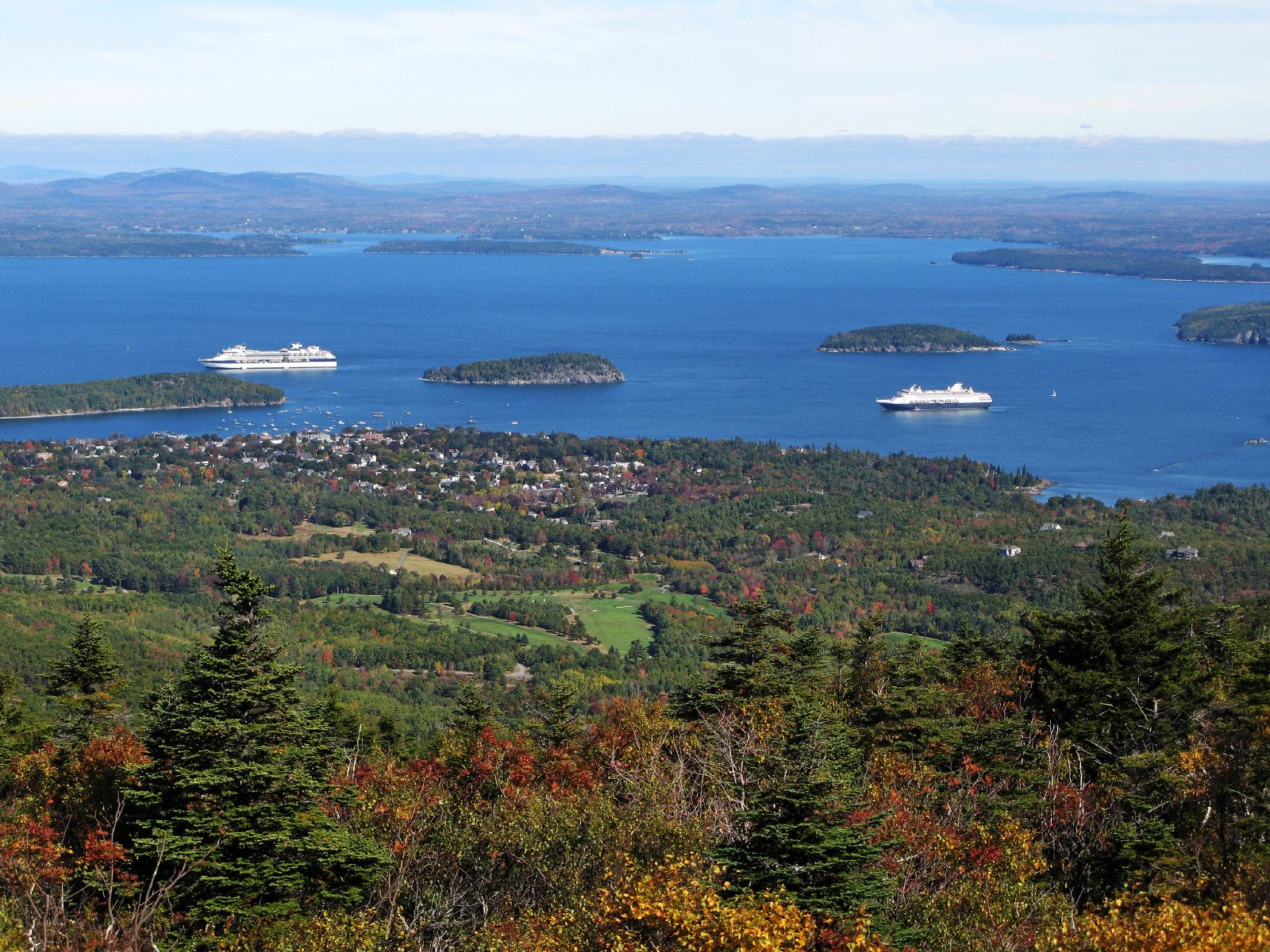
Bar Harbor, Maine and the surrounding geography are too big of a subject for one post, so I will likely revisit this subject again in the future. For now, I'd like to focus on the town of Bar Harbor itself, and the many opportunities it presents for folks wanting to kayak the pristine waters of Frenchman Bay or other nearby waters, or to hike, bike, fish, rockclimb, ride on horseback...a near endless list of outdoor activities. 
Bar Harbor, Frenchman Bay, and the Porcupine Islands
Bar Harbor and Frenchman Bay 

Bar Harbor is the largest town (or village, as the case may be) on Mt. Desert (pron. DEsert or deSERT - either way is acceptable) Island. Mt. Desert Island is home to Acadia National Park, the oldest national park east of the Mississippi. There are several areas that permit boating within the park, which should include kayaking. However, these same areas do not necessarily permit paddle boarding, kite surfing, etc. - so double check with park officials before planning an in-park kayaking trip. You will probably want a wheeled kayak cart with all terrain tires to get your 'yak to the launch point, as parking lots are often not immediately adjacent to the water's edge. You may have to travel via a short trail to get to the water. I personally have not yet paddled within park boundaries, but my inclination is that places like Long Pond and Echo Lake would be prime candidates. Outside the park and surrounding Mt. Desert Island are ocean waters including Frenchman Bay, Eastern Bay, and Somes Sound (once considered a fjord, but now called a fjard). These areas offer a multitude of kayaking trip possibilities, from beginner to advanced - so plan your trip relative to your experience level (see my post Where Should I Paddle? - advice on planning your adventure), or consider joining one of the tours offered by the local kayaking tour businesses. 

The town of Bar Harbor, as the largest populated area on the island, is a hub for all island activities. It's a great place to start when planning a trip. Some of the island locals will lament the summertime influx of tourists that can cause traffic back-ups in town and a less than sedate atmosphere. However, they also bring a lot of commerce with them that supports local retail, restaurants, and recreation opportunities. If a touristy atmosphere drives you crazy, consider visiting in the spring, or better yet, the fall - when the town is a bit quieter than during the height of summer. Alternatively, you can stay outside of Bar Harbor and head in to town to join a kayaking tour, hop on a boat, rent bikes, etc. The Island Explorer bus line offers shuttle routes to many areas on the island. Accommodations range from campgrounds to cabins to hotels, and sometimes come with package deals that include recreational activities. Food offerings range from local markets and lobster pounds where you can find excellent products to cook yourself, to roadside casual spots, and all the way to upscale dining. 

The best aspect of Bar Harbor and Mt. Desert Island is the huge variety of things to do, especially in regards to recreation and the outdoors, within a fairly compact geographical area. You can drive across the island in 30-45 minutes, depending on which route you take. The worst part is how long it can take to get there. From my home in northeastern Massachusetts, it's a 6 hour drive if I stick to Rt.95 north to Augusta, then drive east on Rt.3 to Belfast, then coastal Rt.1 north to Ellsworth, then Rt.3 again - this time southeast onto the island. Alternatively, Rt.1 can be driven for a longer stretch with stops available in several of the mid-coast Maine towns like Rockland and Camden. There is an airport, the Hancock County - Bar Harbor Airport, that offers flights via Cape Air, Pen Air, and Jet Blue. I've never used these carriers, so make sure to research flight options thoroughly if this interests you. A location that requires a bit of a journey, even for New Englanders like myself, can be a good thing. It forces you to leave your day to day life behind and encourages you to optimize your visit once you get there. This can result in a memorable trip. Do your research, plan thoroughly, leave some space and time for spontaneous trip alterations, have back-ups in case of inclement weather, give yourself plenty of time to get there...then enjoy. If you haven't been there before, I guarantee you will want to go back. If you have, then you know what I mean. 

For kayak tours (which I recommend for the less experienced - one of my earliest paddles was on one of these) you can find Acadia Kayak ToursCoastal Kayaking Tours, and Aquaterra Adventures right in Bar Harbor. There are additional kayak touring companies located elsewhere on the island. If you want to paddle independently, you can rent a kayak which can be dropped at a launch point by the rental company. If you bring your own kayak, make sure you have it fully secured for the long drive, that you will be able to park your vehicle comfortably with your kayak(s) loaded, and that you have fully researched the local paddling conditions. Paddling independently in a strange area can be more risky than going on a tour, so talk to the local experts at the rental companies and ask as many questions as you can. Buy a map, if they have one, to compensate them for their advice. Remember, Maine waters are c-c-cold , so wear appropriate clothing (see my post 8 Tips for Dressing Right for Your Kayaking Adventure).


Sand Beach, Acadia National Park
Sand Beach, Acadia from a mountain top

Whether you plan on lazily relaxing in Bar Harbor, paddling the local waters, or climbing a mountain, you will enjoy your visit and marvel at the natural beauty of the place. Acadia National Park is diminutive by the standards of the vast parks of the West, but it is nonetheless remarkable. This area showcases coastal Maine in all its glory, and gives visitors the opportunity to explore its natural wonders, its fresh seafood, its history, and its hospitality - and I haven't yet mentioned the fresh local beer for aficionados (like myself 😋), with brewers like Atlantic Brewing, and Jack Russell's Steak House & Brewery  located right on the island. A cold local beer and some fresh shucked oysters are my little piece of heaven when I'm there.  

Do yourself a favor, if you haven't visited Bar Harbor and Mt. Desert Island, do so as soon as possible. If you have, go back for more. You'll thank me.  

- TB on the Water   


Wednesday, August 9, 2017

Advice: Please, Stop the Kayaking Deaths! (proper risk management)

I have written about safety previously in my post Safety is a Mindset, but I will continue to revisit this topic, as I consider any kayaking related death a tragedy, and possibly preventable. The kayak news feeds I follow are filled with stories of deaths, rescues, injuries, etc. I know, some of this is the nature of "news" itself - if it bleeds, it leads. People are attracted to stories of kayaking deaths the same way we like to read about shark attacks. We can afford to be frightened from a safe distance. That said, there are some trends occurring that I believe could increase the risk of more deaths and injuries. According to a 2016 report from the market research firm NPD, recreational kayak sales increased by double digit percentages during the period of 2014-2016. I wrote about the increasing sale of cheaply made and designed "discount" kayaks in my post The "Kmart Kayaker" - Why More People Are Dying from Paddle Sports . Put these trends together: more kayaks sold, more cheap kayaks purchased - you can postulate a reasonable assumption that many of these kayaks are purchased by inexperienced, possibly out of shape, and possibly uneducated kayakers. 

Experienced kayakers are not immune to risk either, and that is why I wanted to speak more philosophically about the concept of risk assessment, management and mitigation. I am in the process of reading (for the second time - and well worth it) a book entitled Antifragile written by Nassim Nicholas Taleb., formerly a derivatives trader and risk analysis professional on Wall Street. I encourage anyone to read this book. It is dense and sometimes confounding, but challenging to one's view of risk and the benefits of taking risks. Taleb describes a good risk as being one where the downside is known and limited, but the upside is unknown and unlimited. When I read stories of kayaking deaths and injuries, I often identify the opposite. Folks seem to take enormous risks with their safety for what is probably a limited upside. Granted, you may meet the love of your life on a paddle trip, or the physical activity might have a ripple affect on your health and fitness practices and stave off a chronic disease, both of which have an enormous potential upside. Let's face it, though - most kayak trips are meant to provide exercise, enjoyment, exploration, and possibly adventure. While the amounts of each available on a given trip would be hard to quantify, it is not unrealistic to say they are somewhat known and limited. The downside to an improperly planned trip is unlimited - it's death, and all of the heartache, disruption, and pain that it could bring to your loved ones.
USCG rescue
Don't be the guy getting dragged

So, what to do - avoid kayaking? Stay out of the water? Not for me. As the saying goes "I could get hit by a bus tomorrow". Random events are just that - random, and all risk cannot (and should not, in my opinion) be avoided. However, risk can be assessed and mitigated. Is it really worth the experience of solo paddling to that offshore island in February to risk dying? Apparently, for one New Hampshire kayaker it was: story here . For me, it wouldn't be. Look, people are going to die kayaking. They're also going to die falling down a flight of stairs. Not to linger too long on a morbid subject, but I'd rather die in the midst of a supreme adventure then waste away in a nursing home. That said, the upside to that adventure better have damn well been worth it. Because the suffering of my loved ones would be the cost. 

Read every kayak safety article you can. Take a water rescue class. Make sure you have the right equipment - and possibly more than one of everything. Think of the Navy Seal mantra "two is one and one is none" - those guys know how to mitigate risk. Research where you paddle. Read Safety is a Mindset. Wear your PFD. Look at my About me page - I wear a PFD always when paddling my kayak, and a helmet when surfing my waveski. Be honest with yourself about your fitness and experience level.

Do yourself, your loved ones, emergency rescue personnel, and the kayaking community a favor. Properly consider, assess, and mitigate your risk. That way, you'll enjoy kayaking for a long time to come.

- TB on the Water


Wednesday, August 2, 2017

Story: Why I Love the Ocean (a remembrance)

Recently, I went to the beach with my wife and her friend, and spent a few hours lounging on the sand and, primarily, swimming in the relatively warm (65° F is warm for these parts) late July water.There were actually waves big enough to surf, but I'm taking a break from surfing (see my post Why New Hampshire Summer Surfing Sucks) for a bit, and it was fun just to play in the waves and body surf like I did when I was a kid, while my wife and her friend waded in the shallows and talked. I was feeling quite nostalgic as I plunged under the white foam, and tried to catch waves for a ride. I was in the water for a long time, and my mind wandered back to summer days of my youth when I would spend seemingly endless hours in the water at beaches just south of where we currently were. On the drive home, I had a clear vision of a memory that has surfaced from time to time of my sister Debbie, and the summer of 1973.


In the summer of 1973, my father rented an apartment for a week in a ramshackle cottage close to the sand at Salisbury Beach , Massachusetts - just south of the New Hampshire border. It was a new adventure for us. I was 7 years old at the time, and hadn't yet started 2nd grade. I'm sure I had visited the beach at some point on a day trip with my mother, but this was certainly the first time we would be there for days at a stretch. The cottage had a resident basset hound who, although harmless, would howl into the air at us every time we entered the yard through its rickety gate, his clownish ears nearly touching the ground. We showered in a wooden shed fed by a sun warmed water tank on its roof - meant for washing off beach sand, but my parents had us use it even in the cold mornings. I remember the crickets that lived under its wood slat floor. For the week, I was in another world. I played in the sand, splashed in the ocean, ate Kentucky Fried Chicken (a lavish treat for us in those days), and a couple of times was allowed to play at the carnival-like Salisbury center - a few streets populated with arcades, pin ball machines, skee ball, an old wooden roller coaster, and a beach side ferris wheel. When I was tired of the beach, I would chase grass hoppers in the dune grass of the yard.

I wasn't fully aware of the reason my father rented that cottage apartment, but I knew it had something to do with my sister Debbie, who suffered from cystic fibrosis - a genetically inherited disease that attacks and degrades the lungs, pancreas, and other organs. Debbie had wanted to be at the beach. She probably didn't count on getting stuck at the top of the ferris wheel for 20 minutes, which happened once. She might not have counted on, although I would imagine she had some notion, this being her one and only stay at the beach. She died the following winter in February of 1974 at the age of 17. We were at this ramshackle cottage in this run down beach side town, because it was all my father could afford - his being awash in medical bills and the costs of raising 4 other children. He must have known this was the time to do what he could to make his daughter happy, because time was running out.

The memory I have of Debbie from that week, aside from the ferris wheel incident, that stays with me the longest, and resurfaces in dreams and on days like my recent beach visit, is of me and her in the water together. This was unusual, because Debbie wore a  trach (pronounced "trake") - a tube that was inserted through a hole in her throat to assist with breathing. This made water perilous, because any water that entered through this tube would drain straight into her lungs. A year before our beach trip, my father had installed a small above ground pool in our backyard that Debbie loved to go in. She had to stay above water, and if I was in the pool with her, I was admonished not to splash. This was the ocean, though, and we were in it together - Debbie leading me into water deeper than where my feet could touch the bottom. I remember it being the morning, because it was quiet. I remember the water was calm, with gently rolling swells Debbie lifted me over as they passed us. I remember being afraid at first to be in water deeper than I could stand in (I was only 7) but I also remember trusting my sister to keep me safe. The morning sun shimmered on the calm water, and I was in my sister's arms. 

I have never lived more than an hour's drive from the ocean. Even when I lived for a brief period in southern California, and climbed on a surf board for the first time at Doheny State Beach, it was only a short ride back to Mission Viejo, my temporary home. The ocean has always been somehow in my veins. You could trace that back to the yearly cottage rentals that became a tradition for our family after the first stay with Debbie. You could trace it back to the hours I spent frolicking in the surf or hunting for crabs at low tide. Later, when I took up kayaking and waveski surfing, I had even more reason to to be near, and in, the ocean.

I trace it back to the memory of the calm water, the shining sun, and my sister's arms holding me tight.

- TB on the Water   


Wednesday, July 26, 2017

Opinion: Public Lands (including waterways) are Under Siege

Katahdin Woods and Waterways, Maine
Katahdin Woods and Waterways


I have been reading an alarming number of stories recently regarding the efforts of the Trump administration to roll back Obama administration designations of new public lands - and frankly, to go farther back into previous administrations' additions to our parks and refuges.These efforts have been emboldened by the court victory of Cliven Bundy and his fellow defendants against charges related to their occupation of the Malheur National Wildlife Refuge in Oregon. Closer to home here in the Northeast, the recently designated Katahdin Woods and Waters national monument in Maine has come under scrutiny by the Trump administration, urged on by Maine Governor Paul LePage.  

I am sympathetic to arguments and opposing opinions regarding the proper use of land resources. I do not think the exploitation of natural resources (logging, hunting, etc) is necessarily a bad thing. The myth that native peoples lived in a wild, untamed Eden before Europeans arrived is just that - a myth. Evidence suggests native peoples burned forests to promote the growth of nut bearing trees, and of berry bearing bushes - and to clear the undergrowth to make movement through the forests and the hunting of game animals drawn to fresh, post-fire plant growth easier. However, I would argue these people had an understanding of the environment far more sophisticated than any arriving European, and certainly a much lighter hand as they worked with natural processes.

Here's something I don't understand, however: the land donated for the Katahdin Woods and Waterways national monument was purchased by Roxanne Quimby, co-founder of Burt's Bees, purveyor of "natural" products like their well known lip balm. As far as I am aware, no seller was unduly pressured to sell his or her land, and it was purchased with profits made by an American based business - profits earned in the free and open market in the face of competition. If an American citizen spends her own legally made U.S. dollars on tens of thousands of acres, then decides to gift those acres for a national monument, why is the allegedly small government/free market supporting governor of Maine against that? It seems inconsistent. One might even say hypocritical. A cynical mind might wonder for who's interests the governor is actually working. Certainly, the folks who oppose this national monument could have purchased the land themselves when it was for sale.They didn't. Roxanne Quimby did. Because of that, and her generous gift to our nation, every U.S. citizen can access those lands for purposes of recreation and enjoyment. The very same process of privately purchased lands donated to the nation (in this case via the Hancock County Trustees of Public Reservations) resulted in the development of Acadia National Park on Maine's seacoast. Today, Acadia is an economic engine, driven by tourist dollars, for Mt. Desert Island and surrounding areas - besides being an incredible jewel of natural wonder, offering myriad recreational opportunities, including kayaking (see my post Bar Harbor - Gateway to Outdoor Adventure).

In a recent Boston Globe piece discussing the threat to Kathadin Woods and Waterways, David Abel writes:
Environmental groups immediately questioned the president’s legal authority to reverse a previous president’s designation, but the Trump administration has suggested that some of the restrictions on mining, logging, and other commercial and recreational activities have gone too far.  
Note the reference to mining and logging restrictions, then ask yourself who is really behind these efforts - and how much money they might be funneling into Political Action Committees and other coffers.

If you believe in the idea of lands designated for the use of all citizens, and for the welfare of the animals and environment within them, then let your voice be heard. Because, I can assure you, those on the opposing side with money to spend will surely make sure theirs are heard.

- TB on the Water

Read the full Boston Globe article here:

Environmentalists vow to fight Trump on Maine monument


Wednesday, July 19, 2017

Paddle Trip: Pavilion Beach to Sandy Point

I thought I'd start featuring some specific trip descriptions - especially for anyone who might want to paddle a similar route. Here's my most recent...

For a short, local escape on a bright summer day, Tim (An Unexpected Adventure) and I departed from Pavilion Beach (map here) in Ipswich, MA around 1:00pm and headed east across the entrance to Plumb Island Sound toward Sandy Point State Reservation.This wouldn't be a long distance paddle, but the idea was for a few hours of relaxation started from a convenient launch spot. Pavilion Beach can get parked up pretty quickly in the summer, but this was a slow day, and we had no trouble finding a spot right at the edge of the beach. Low tide was a little after noon, so we'd have the incoming tide largely behind us as we made our way back. We had to carry the 'yaks 30 yards or so to get to the water's edge, but the footing was decent - not very muddy and largely sand. The water was smooth as glass at the shore, but a little wind chop picked up as we departed the beach. There are dozens of boats moored near Pavilion Beach and farther into the sound, and this is a popular passage to the mouth of the Ipswich River and the open ocean beyond for boats of all sorts, so we had to keep an eye out and cross the boat lanes carefully. The deep water channel curves closer to Pavilion than to Sandy Point on the other side, so boat traffic was an early concern. Fortunately, there were only a couple of power boats navigating the channel, so we crossed in short order, and got ourselves away from boat traffic.


Little Neck and Great Neck Ipswich viewed from a sandbar
Little Neck and Great Neck (launch location) viewed from the sandbar 

As we paddled farther across the sound, I noticed the tide was low enough that a long shallow section pointing south from Sandy Point was visible, even from a distance. The lighter colored water was a giveaway. We angled southeast toward this area, and discussed the possibility of crossing the channel again at its narrow point and heading south to Crane Beach. I wasn't about to commit to that without laying eyes on the current in the narrow section of the channel before deciding. As we moved along the edge of the shallows, however, I began to notice that a sandbar in the distance appeared to be on our side of the channel - across the shallow section from us. Several boats had pulled up to it, and people were enjoying the temporary island while they could. We opted to head to this sandbar and investigate. The wind and the incoming tide were roughing up the conditions over the shallows, and as we progressed, wave chop grew. It was manageable, though, and actually fun to navigate. Having an opportunity to paddle in challenging (even mildly) conditions, when the water is shallow enough to walk in it, is fantastic. It's a great chance for a new or rusty paddler to work on skills without the risk of capsizing in deep water. In fact, if you run across a situation like that, it might be a good place to intentionally capsize, to practice your emergency skills. Just make sure it's deep enough if you intend to roll your boat - you don't want to knock your head on the bottom. 


Looking south toward the Crane Estate from a sand bar
Looking south toward the Crane Estate from the sandbar

We crossed the choppy shallows and pulled up to a pristine sandbar, that was still pretty expansive at this stage of the incoming tide. Folks were lounging, swimming...I saw a group playing bocce. It was a temporary oasis so long as the tide allowed it to remain. I took a swim while Tim caught some rays, and then walked out to a quickly disappearing strip of sand, off the larger bar, that pointed north toward Plumb Island. The water was rougher here, as crisscrossing waves collided with each other. A striped bass flashed past my my leg in the clear water. This was a beautiful spot, but it was evident that it wasn't going to last. By the time I got back to the kayaks, they were almost in water, and Tim had moved them once already.  


Looking north to Plumb Island from a sand bar
Looking north from the sand bar toward Plumb Island

We got back in the 'yaks and paddled north toward Sandy Point. The inbound tide had increased the previous chop to a small swell now, and we rode the face of the swell toward the point. As the water grew shallow again around the point, I started to notice occasional rounded shapes on the bottom. I realized they were horseshoe crabs, and doubled back to see if I could grab one. I managed to hunt one down and to pick it up without getting spiked by its pointed tale or pinched by its mini-pincers. I never lose my fascination with these creatures; they are so alien, so ancient looking. After some brief examination, I released the animal back into the water. I guessed that it was a male, because it was smaller in size than some of the others I saw - my understanding is that the males are smaller relative to the females. We continued north along the western edge of Plumb Island, and into a natural harbor formed by the mouths of a couple creeks that meander into the island marsh grass. Houseboats are moored in this area, and I mentioned to Tim my envy for these vessels - who knows, one day maybe I'll own one.   

I took a look at my watch, and saw it was close to 3:00, so it was a good time to head back. We still had to cross the sound, and then paddle for a stretch against the inbound tide to get back to Pavilion Beach. As we headed back across the sound toward Great Neck I noticed how much the tide had increased the water flow. The current flowing into the sound with the the tide was sufficient to drag us as we pushed to cross it. This can be a challenging scenario when you're among moored boats, as we were. You need to anticipate where your paddle rate and forward momentum will move you relative to the force of the current dragging you in a different direction. You'll end up drifting behind some boats that you initially thought you'd paddle in front of. That's OK though, so long as you're making general progress toward your goal - in this case, getting across the sound and the swifter channel. We eventually made it across, but now faced directly into the inbound tide and the wind as we proceeded along the coast of Great Neck, south toward Pavilion Beach. It was a challenge, and the hardest part of the trip, to make that final effort back to the beach, but I was glad for the exertion. I tried doing this same section once in a much smaller kayak, but couldn't beat the current and had to drag the kayak along as I walked the shore. My Sea Dart did fine,though, and we drifted onto the beach at Pavilion around 3:45pm.

A quick reminder about safety - even though I wasn't alone, and this was intended as an easy paddle, I made sure to text my wife before I departed with the details of our location, and again when we landed back at the beach to let her know we were out of the water.  

All in all, this was a great local paddle with some beautiful natural highlights. I'd recommend it to anybody - just watch the tide and conditions, and keep an eye out for boats.

- TB on the Water


Wednesday, July 12, 2017

Gear: Benefits and Weaknesses of SOT (Sit-On-Top) Kayaks

I briefly discussed some of the benefits of SOT kayaks in my previous post Safety is a Mindset, but I'd like to get into the subject in a bit more detail. 

The primary benefit, in my opinion, of an SOT kayak is safety. It is a kayak that can be climbed into without the restrictions of a closed hull cockpit, and water in the cockpit hull will self bail through a drain hole, or can easily be dumped out if the kayak is turned over - even in water. Draining a swamped closed hull cockpit is significantly harder to do. There is no self bailing drain hole, and the main idea is to keep water out of the cockpit in the first place. That is one of the reasons closed hull 'yaks are fitted with a spray skirt - to seal the kayaker into the cockpit and away from the water. This requires the kayaker to "roll" (video tutorial here) the kayak. Alternatively, the closed hull kayaker can pull the front loop on her spray skirt and wet exit the cockpit - which will then need to be bailed out, re-entered, and re-fitted with the spray skirt. In challenging conditions, this can be difficult, tiring, and add to the overall danger of the scenario. Now, picture an SOT kayaker rolling her boat over (video tutorial here) and climbing back on it - faster, easier, less tiring...less dangerous. Remember, a swamped kayak sits much lower in the water, which makes it much more likely it will continue to get swamped in rough conditions. It is also incredibly heavy if you try to drag it onto land. Several cubic feet of water is a huge weight, and very hard, or even impossible, for many people to move. I remember foolishly beach landing my previous closed hull kayak (a Perception touring model) without a spray skirt. It got swamped by waves, and dragging it onto the beach was incredibly difficult. Trying to punch back out through the waves without the spray skirt was also nearly impossible, as the cockpit took on water and made paddling the heavier, lower kayak much harder. Then, I had to bail out the cockpit, as well as I could, to continue on my journey - I thought "never again" on that trip. 

So, a spray skirt and the commitment to learn how to roll a closed hull kayak are essential to its safe operation - especially if you plan to venture into cold ocean waters. The beauty of that design is its efficient rolling capability. Closed hull kayaks are built to roll. That's part of the overall strategy to keep water out of the kayak in the first place. Think about it - the native peoples who invented the kayak had absolutely NO interest in a wet exit. The water and air temperatures they operated in meant almost certain death if they got wet. And they weren't operating their kayaks for recreation. They were hunting. So, the death of a hunter could mean starvation for his family. That was NOT what anyone wanted. They designed a craft, therefore, that, in concert with the acquired skill of rolling it, could keep them dry in the event of a capsize. That is either a benefit or a weakness of the closed hull design - depending on the acquisition of the rolling skill. 

SOT kayaks take acquiring the rolling skill out of the "necessary" category, and move it into the "nice to have" category. This can also be seen as both a benefit and a weakness, because SOT kayaks are not designed to easily roll. They are wider, sharper edged at the chines (the side transition between the lower hull and upper deck), and the paddler is not "locked in" to them unless she affixes thigh straps. However, it can be done. This kayaker shows how - note he has thigh straps deployed...  .


SOTs put the paddler in much more direct contact with the elements. This requires proper clothing. If you roll your SOT, you will get much wetter than by rolling a closed hull 'yak. So, full body clothing protection is required. This may mean a dry suit - which can be expensive (see my post 8 Tips for Dressing Right for Your Kayaking Adventure). 

SOTs are heavier than closed hull 'yaks, therefore they are harder to put on your vehicle, harder to carry, and are slower to get going on the water. Finding a touring or expedition style SOT is difficult, and they are not without their construction issues. You should do extensive research on what SOT is right for you (see my post 10 Tips for Which Kayak You Should Buy ) and check them out in person before buying. Try a couple models at least for a test paddle to see how you like them. If you don't want to shell out for a new one, find a current model that has great reviews, then see if you can locate the same model from a previous year used, or a similar model from the same manufacturer (sometimes changes in model year are small, and even model name changes aren't hugely significant) that has been phased out - you can often get these at a discount. 

SOTs can often be more expensive than comparable closed hull kayaks. This makes opting for one a decision that requires careful consideration. In my estimation, however, that consideration is well worth it if you can locate an SOT you are happy with. For me, it comes back to the safety issue. How much effort is it worth to locate the right SOT if it saves your life one day? I think it's worth every second of time, energy, and expense.

A few years back, I tried surfing a closed hull kayak in waves (see my post What's That Thing Called? ). My experience being upside down in a closed hull, without a solid roll convinced me to switch to a sit-on-top waveski. After seeing how well that set up worked in waves, it was a no-brainer to apply that knowledge to my touring kayak. So, I ditched my closed hull 'yak, and found a used Heritage Sea Dart SOT (unfortunately, no longer manufactured), and I haven't looked back.

My safety is my greatest priority when heading into the water. Not all risks can be foreseen or avoided, but they can perhaps be mitigated (see my post Please, Stop the Kayaking Deaths! (proper risk management)). It's something to think about if you're looking into an SOT option.

Plan for the worst, then enjoy the best.

- TB on the Water 


Tuesday, July 4, 2017

Travel: Newcastle, New Hampshire - a Kayaker's Dream

Happy 4th of July!

I can't think of a better seacoast area to explore by kayak over the 4th of July holiday than Newcastle, New Hampshire. Newcastle is essentially an island that sits due east of Portsmouth, NH, adjacent to the mouth of the Piscataqua (locals pronounce it pis-CAT-a-kwa, but I've heard pis-ca-TAK-wa is more correct) River. Newcastle proper defines the eastern border of a protected body of water that is considered part of the river, but doesn't have any current, save for the flow under 2 bridges that, along with their respective causeways, mark the northern and southern edges of this expanse. These causeways are part of the looping Rt.1B that shoots off coastal Rt.1A just before Sagamore Creek in the south and reconnects to Portsmouth Ave./Newcastle Ave. and downtown Portsmouth in the north. South of the Rt.1B loop is another protected body of water that is defined by the mainland to the west, Odiorne Point to the south, 2 breakwaters opposite each other to the east, and the Newcastle coastline and Rt.1B to the north. 2 protected water expanses, plus access to Sagamore Creek, the ocean beyond the breakwaters, and the impressive Piscataqua River is quite an array of paddling opportunities in a relatively confined area. That said, the area is not without its challenges, and even dangers.

View of Sagamore Creek

As one might imagine, kayaks are not the only craft making use of this area. Boats of all types are present, and jet skis appear from time to time. Fortunately, they are relegated to deeper sections, and much of this area is relatively shallow. Kayaks truly have an advantage here. Currents are not a major factor in most of the area, but they can be profound with tidal flow under the causeway bridges and around points and the breakwaters. I've never been turned back by a current here, but I could see it happening, depending on the tide. I think the biggest danger in this area is complacency. It is so ideal, that a kayaker might get a little too comfortable and not fully focused. Pinch points like bridges should be navigated with respect for their dangers. Also the Piscataqua is a substantial river - one of the bigger rivers in the area. It moves a tremendous amount of water. No one but experienced kayakers should venture beyond Newcastle Ave. and into the main river - and, forget about paddling against the current unless the inbound tide is pushing you. It is a seriously dangerous area and should not be taken lightly. The ocean beyond the breakwaters can also be dangerous, so the same advice applies. If you decide to paddle beyond them, watch for the lines of fishermen who cast off the end of the south breakwater.

Parking is available at Odiorne Point State Park for a fee, but gates may be closed in off hours. The parking lot can also fill up fast in the summer. There is limited parking on the other side of the short wooden bridge adjacent to the lot entrance, but it is a steep slope and the tide can rise and swamp your vehicle, so be careful to park above the high tide line. I have parked here many times, but it can be challenging, and the bottom is quite muddy at low tide. There are several spots on the Portsmouth Ave. section of Rt.1B in Newcastle, with a gravel boat launch suitable for kayaks, but I am unaware of any required fees or permits to park there. I have parked on the roadside in the past, and have not received a citation or had any issues. There is significant parking and a boat launch on Pierce Island, just off the Strawberry Bank section of Portsmouth. However, this is north of Newcastle Ave., and is in the main river. The water is protected on the south side of Pierce Island, but if you want to access the Newcastle protected waters, you will have to pass under a bridge that could have a significant current on an outbound tide.   

Paddling options are plentiful here. You can wander through the many islands in the section encompassed by Rt.1B. You can paddle upstream on Sagamore Creek, which stretches west and expands into a wider, less developed section . You can raft onto the beach at Odiorne Point and go for a swim (expect cold water, though). For the experienced and adventurous, you can paddle into the Piscataqua, and travel downstream to circumnavigate Newcastle, then re-enter past the breakwaters on the south side. This area is also a decent location for kayak fishing, although I never hooked a striped bass here in the 'yak. One unusual option for the adults is to pull up onto the small beach to the left of BG's BoatHouse on Sagamore Creek and enjoy a couple of libations and maybe a lobster roll, before you head back out to the water (just make sure it's not more than a couple libations - operating a kayak while inebriated is dangerous, and possibly illegal). 


Newcastle is also home to the historic Wentworth By The Sea Hotel, which was the location for the signing of the treaty that ended the Russo-Japanese war. Odiorne Point to the south was once home to huge defensive battleship sized guns, designed to attack possible invading German Navy ships during the 2nd World War. Many of the installations, although decommissioned and in disrepair, are still present - as well as secretly accessible (though officially off limits) underground tunnels and chambers. 

With mostly calm waters, multiple paddling options for all skill levels, and amazing scenery like the Wentworth By The Sea, you would be hard pressed to find a better kayaking location than Newcastle, NH. You could even rent a kayak or two, if you don't own one, at Portsmouth Kayak Adventures located right on Rt.1B (called Wentworth Ave in this stretch). Oh, and I haven't yet mentioned the many attractions in nearby Portsmouth - one of this country's oldest cities and home to great shopping, food, and near to my heart, beer at places like Earth Eagle Brewings.

So, show your patriotic pride and travel to a historic area that played an important role in fighting the Revolutionary War, ending the Russo-Japanese War, and protecting our coast during the 2nd World War, in addition to building and repairing all manner of U.S. Navy ships at the Portsmouth Naval Shipyard - and enjoy it from the perspective of a fantastic paddle adventure on its welcoming waters.

- TB on the Water 


Wednesday, June 28, 2017

Opinion: Why New Hampshire Summer Surfing Sucks (and it has nothing to do with the waves)

I'm back after a brief hiatus...and with a topic near and dear to my heart:

So, New Hampshire (and northern New England in general) is not known for consistently great waves. Autumn into winter has been prime time in these parts as long as I've been surfing my waveski, and the frigid winter waters can offer some opportunities - especially for the more discerning among us (48℉ water can make anybody more discerning 😜).Spring storms can drive some decent swells. Summer tends to get a little flat. That being said, occasionally summer waves are OK - even a few feet on the face from time to time. The luxury of surfing without a full wetsuit is a summertime blessing. So, waves are available if you're patient. But, like the title to this post says - New Hampshire sucking has nothing to do with the waves.

I'm going to focus on New Hampshire, but my criticisms can apply more broadly to other New England states. New Hampshire, in my experience, is one of the more egregious states in its flat out discrimination toward surfers. Let's start with the parking.


Rye, New Hampshire beach parking Rye, New Hampshire beach parking permit only
Rye, New Hampshire Beach Parking

New Hampshire has to maximize its revenue from its small coastline, so parking spots are metered at places like The Wall in North Hampton. At least these meters accept a credit card, and allow for a few hours of paid parking. As long as you have a watch, you can safely park for the fee - currently $2/hr. I cannot say the same for farther up the coast. Rye posts signs threatening a $100 fine and the possibility of towing if you park parallel to the loose stone levy along Sawyer's Beach. The signs go up for Memorial Day, and do not come down until after Labor Day. The 30-40 spots are for town permit holders only, and I am unaware of any opportunity to obtain one if you are not a town resident. The number of times I have driven past this stretch and eyeballed dozens of unused parking spots is too many to count. The small lot at Jenness Beach is paid parking, and fills up fast. There are some free spots farther north on Rt. 1A, and on a side street with beach access - but you better make damn sure your tires do not cross the white line on the roadside, or you will be fined by traffic enforcement patrolling on scooters. Look, I understand property tax paying residents (NH has no sales or income tax, and relies on high property taxes) want to exercise their rights to access their beaches in the summer. What I don't understand is why they would want to waste unused parking spaces that could be occupied by out of towners who, you know, might drop a little coin at their local businesses - businesses that are also local tax payers. The parking restrictions are based on arbitrary dates, and not on actual usage by residents. That lays out a big "UNwelcome" mat to visitors.

The lifeguards - oh, the lifeguards. New Hampshire beaches invariably hire summer lifeguards who are apparently college age young people. I think that's great. One thing that's lacking, however, in these young people, is any capacity for judgment and a non-arbitrary application of the rules. Two summers ago, I was flagged down by a lifeguard as I surfed, who informed me of a complaint from a parent that I was surfing too close to her children. When I asked the young lady if she had informed the mother that I was not allowed to surf in the no-surf, bather only, flag marked section roughly fifteen feet to our left, and that her children could safely avail themselves of that area to their heart's content, she replied "yes, she thought that was the surfing area, you're not doing anything wrong". You'll recognize the obvious question - "then why am I having this conversation"? I didn't even bother to ask. The point was a mother, whether right or wrong (wrong in this case) had complained, and the young lifeguard felt it necessary to, sort of, reprimand me for what I was not doing wrong. I continued as I was, where I was - but not without.a feeling of having been unduly singled out.

This past weekend, I attempted to surf at The Wall in North Hampton. I paid for a few hours of parking at the meter, proceeded into the water where there were almost no bathers (maybe one or two scattered - the water is still cold for bare skin), and tried to catch what small waves I could. Within 30 minutes, I was hailed by a lifeguard. When I got near the young man, I asked him what the issue was. He stated "you can still do that, but you have to move down the beach to where the other surfers are". (Earlier, I saw a bunched up group of surfers in an area with little apparent wave action, and wondered why they were there). I immediately scanned the beach to look for flags marking a no-surf area, or even guard towers with signage. There were none. So, I asked the young lifeguard "where are the flags?". He looked around and shrugged "someone just took them down". Again - why am I having this conversation? So, I am to move to an undefined area "somewhere" down the beach, to join a group of sardine packed surfers (that's not dangerous 😒) so that almost no bathers (who haven't complained as far as I know) have this section to themselves? Absolutely ludicrous. Nevertheless, I complied.

As I moved south down the beach, catching what lefts I could to speed the process, I was hailed again. I couldn't believe it. Was this the same lifeguard who pushed me out of my previous spot? No, as it turned out. It was another young man telling me I would need to move farther to some undefined area. I had enough at this point, and as I exited the water past the young lifeguard, I asked him who I could contact to get a refund on my parking fee. He just shrugged his shoulders. I told him no flags marking a no-surf zone were posted, and he just stared at me blankly. You'll understand my consternation when, 20 minutes later, as I was peeling off my wetsuit and stowing my gear, I saw the very same lifeguard walk past me on the sidewalk, carrying two flags - the very ones that were not deployed when he harassed me out of the water. I have since contacted the NH State Department of Parks & Recreation, which manages Hampton Beach. Meredith Collins from that department returned my call promptly, listened attentively, and promised to look into the incident. Hopefully, that bodes well for the future - she seems to be quite competent.

That said, these are not the only two ridiculous interactions I've had with New Hampshire summer lifeguards. I wish I could say otherwise.

The bathers - It is a very peculiar psychology indeed that drives the first bather of the day (when you have risen at the crack of dawn to hit the waves early, and have been surfing a spot for a couple of hours) wades into the ocean directly in front of you - and then stands frozen in panic as the next wave you catch pushes you toward him. The angry scowl that replaces the panic, once he realizes the wave will carry you past him, betrays his complete ignorance. His inability to recognize the fifty yards of unoccupied water to the left and to the right is only matched by his incapacity to appreciate that you were there first - you know, at the crack of dawn, unlike his lazy ass that just rolled out of bed and probably hasn't showered yet. The recognition of surf culture that exists in Hawaii and California (hell, even Florida) is not present in New Hampshire. People are just plain stupid around surfers. Throw in the surf casting fishermen who throw lines out in front of surfers, the yahoos who float out on discount club kayaks or inflated inner tubes, and boogie boarders who haven't figured out you need swim fins to surf waves with those things (how exactly are you going to paddle with both hands holding the board?), and it turns into a circus pretty fast. 

The ocean is for everyone, and I have no issue with rules to accommodate multiple uses, but the rules should apply to bathers and others as equally as they apply to surfers. In New Hampshire, they don't. And towns should recognize that every visitor disgruntled by their policies is much less likely to spend a nickel at local businesses - including surf shops like Summer Sessions and Cinnamon Rainbows  who, I'm sure, have no issue accepting out of town money.   

Give me the colder autumn water, the clearer air, plenty of parking, and better waves. I'm hanging up my surf gear until the fall. It's time to get in some long paddles on the touring 'yak. At least the open water won't have any bathers. Now, I just have to watch out for the jet skis 😉.

- TB on the Water      


Wednesday, May 24, 2017

Adventure: Aleksander Doba, the Polish Kayaker Who Crossed the Atlantic (three times!)

I love stories of (some would say) crazy adventurers who take on, and often accomplish, goals so daunting it makes my longest paddles seem like a walk in the park. They harken back to days when famous explorers took on life threatening conditions because they didn't really have any other way to gain fame and fortune. We live in a modern world that has many advantages of comfort and relative safety, but sometimes I wonder if we've lost some of our vital spirit along the way. Fortunately, there are a few individuals who remind us by their epic adventures that the marrow of life is still available for those willing to risk and suffer to get at it.

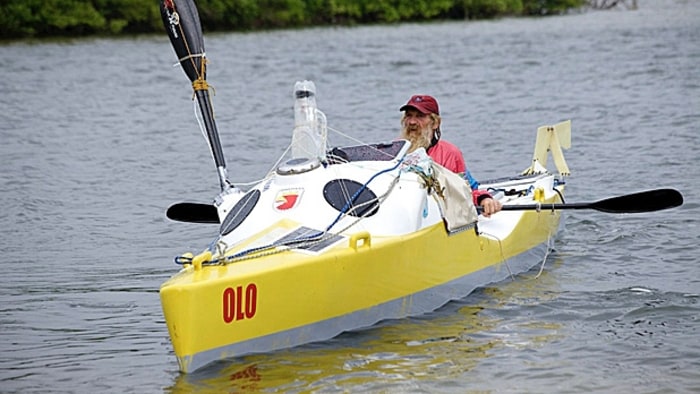
Aleksander Doba appears to be one such individual. I read a post on Men's Journal from 2014 that recounts Doba's paddle across the Atlantic from Portugal to Florida. This was his second crossing, and he estimates that, due to his drift in currents, he paddled some 7,000 miles - this from a 67 year old man sporting a long, grey beard.

Now, I have no intention of embarking on anything vaguely close to the challenges Doba takes on (for example, he's the first person to paddle the length of the Amazon). However, he does inspire me to push my boundaries, and not to use the passing years as an excuse to grow ever more tentative. It reminds me of a great Anthony Hopkins movie, The Edge , where he tries to build Alec Baldwin's confidence for a looming battle with a predatory grizzly bear by repeating "What one man can do, another can do". Certainly not without preparation and training, but theoretically, yes - what what man can do, another can do.

Take a look at the Men's Journal post here:

Men's Journal - A Record-Breaking Atlantic Crossing by Kayak  

**UPDATE** He has now crossed the Atlantic solo THREE times - now at the age of 70. Read the story here Canoe & Kayak: 70-YEAR-OLD KAYAKER CROSSES ATLANTIC, KEEPS GOING   


Aleksander Doba transatlantic kayak
Aleksander Doba -  Nicola Muirhead/@nicolaanne_photo 


Keep your spirit of adventure alive, and push your boundaries - no matter how close to home they may be.

- TB on the Water