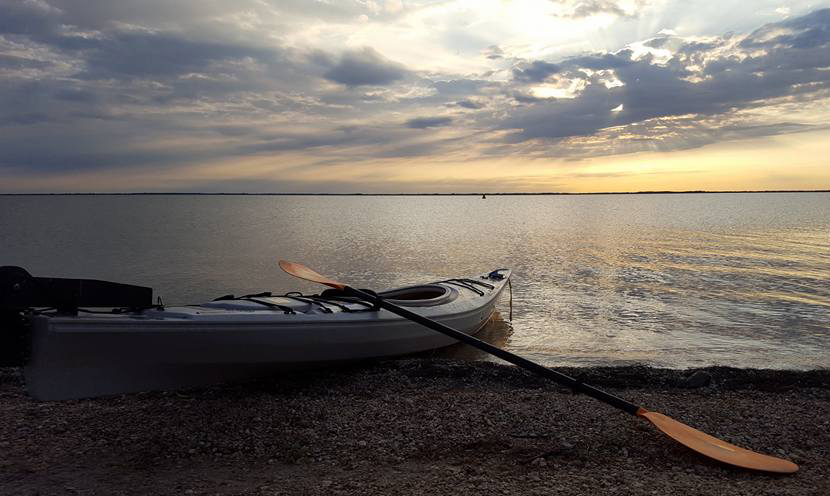
By TB on the Water - a New England kayaker and waveski surfer who shares advice and adventures from his unique perspective - DIY, cost effective, and robust solutions and practices...and sometimes a good beer to wash it all down (links to local brewers at the bottom right).
When I started this blog, I must admit, I had no firm idea where it would go. I knew I had some advice that might be useful - especially for beginners. There are plenty of kayakers out there who have a great deal more experience and expertise than I do, but I still see some value in adding my voice to the conversation. On many occasions, when the topic of kayaking came up in general small talk, I found myself answering questions for folks who seemed unaware of the basic requirements for safe enjoyment of the sport, and who (let's face it) probably won't ever really get into kayaking in anything but a casual way. That's fine. I have no problem with people recognizing they don't have the time or interest level to fully commit to any particular activity. I enjoy kayaking and waveski surfing (see my post What's That Thing Called? (it's a waveski)), but I work a full time job and have limited hours to spend on each pursuit. Surfing has shifted into the forefront of my water activities in recent years - I can get to my usual break in less than an hour, surf for a couple hours, and get back before noontime after a morning surf. I do enjoy the several times a year I get the long boat (what I call my touring kayak) out for a paddle with Tim (see my post Paddle Trip: Choate Island and Crane Beach) or Mike (see my post 5 Tips for Kayak Fishing (once in a while)). The fewer times we can fit touring or fishing paddles into our schedules makes me appreciate the occasional trip all the more. So, I can understand anyone who might have only a peripheral interest in trying out a kayak. I hope the advice I have given in posts like 10 Tips for Which Kayak You Should Buy (hint: maybe none at all) help steer those folks to kayaking opportunities that don't require a huge commitment - like rentals or organized tours, for example. For those who do want to take the next step, I have aimed to provide some advice for lowering the cost of entry to the sport, and the cost of maintenance of your equipment (see my post Kayak Repairs That Last - 10 Tips for Maintaining Your Kayak). I still have some more advice on those topics for future posts, but the post links above, and other posts I have published are a good start for anyone wanting to learn more. I have also linked to other resources that can provide additional information, and I strive to make sure those resources offer the level of quality my readers deserve. Another aspect of my blog content has been the promotion and appreciation of my local New England coastal waterways. I have been drawn to these waters since my youth (see my post Why I Love the Ocean), and my wish for my last breath would be to release it while gazing upon the shining Atlantic. My love for New England and its waters was only heightened by a brief foray to the southern California coast in the early 1990s. When I drove back across this great country (ostensibly for a temporary visit - and boy, Texas takes a long time to drive across!), I knew, when my eyes caught the glinting morning light reflected through thin ice on Connecticut hardwood trees, that I would never leave. My first gaze upon my beloved Atlantic only confirmed that knowledge. I am a New Englander. It is in my bones, and I hope that condition shines through my posts about local paddle trips and locations. I try to offer as objective a viewpoint as possible, including some criticism of local shortcomings like parking and access to the water (see my post Essex Bay - A Northeast Massachusetts Gem (but where's the parking?)). Let's face it, though, I am a booster for all things New England, and will continue to be. If a reader from another region or part of the world gets a taste for this beautiful coastline from my blog, then I've done my job as I see it.
The beautiful Atlantic Ocean off New England
My readership has grown quite a bit since my first post, and it's been interesting to see who's viewing my blog. Of course, the lion's share of views have come from the U.S., but there are also views from many countries throughout the world, on most continents. I hope I represent New England residents, and kayakers more specifically, well. I can imagine a resident of some distant land, who may not have much knowledge of the New England area, having her perspective on the region at least partially shaped by my posts. That idea gives me a sense of responsibility that will continue to inform my writing moving forward. With the exception of the month of June, 2017, I have been publishing weekly blog posts. Now that 30 posts have been accumulated (a goal I set for myself a few months ago), I will be posting less frequently. I haven't yet fully decided how often that will be, but my Posting Schedule page will list updates to my posting frequency. Less frequent posts may take on a different tone - maybe longer, maybe a series on a specific topic - I'm not quite sure yet. I also want to curate more useful content onto my blog, to make it more of a "one stop shop" for my readers. Whatever form this blog takes in the future, I will continue to strive with integrity to provide my honest viewpoint and perspective on kayaking New England waters. Thank you to anyone who has visited this blog (or may be visiting now, for the first time). The concept that anyone might find what I have to say useful or interesting is humbling. In an ever busy world, time is ever more precious. Thanks for spending some of yours with me. Be safe, take care of your gear, plan your trips well - then get out there and paddle with a song in your heart. Here's to the next 30 posts! - TB on the Water
New England is famous worldwide for its glorious fall foliage. The amazing color variations of leaves during this season include reds, oranges, yellows, greens, and everything in between. Different plant species change color at different times, so the color palette changes over the course of the season, and from place to place. Color change comes earlier in the north, and later in the south, and can also be affected by elevation and micro-climate conditions. When exactly the change begins and ends differs from year to year, and can be affected greatly by the amount of summer rainfall and the weather patterns. So, it's no guarantee any particular year will be ablaze with color variation. Most years, though, reward us with spectacular scenery. 2017 is forecast for a spectacular show (story here). New England fall tourism can generate billions of dollars of revenue for the region. Most people drive to their favorite locations, like the White Mountains, then hike a trail, or stop at a scenic lookout. Folks get out on foliage train rides, boat cruises, bike tours, ATVs - so, why not include kayaking in the fun?
New England lakeside fall foliage
One of the great advantages of viewing foliage from a kayak is you'll have much less competition for a prime viewing spot. Unless you're in a busy waterway, you'll have nothing between you and the trees. In some places, you'll be able to paddle right up to, or underneath, them. Another advantage is, well, you'll be in a kayak, enjoying all the benefits kayaking offers the rest of the year. It's just an enhanced version in the fall. Daytime temperatures can remain quite warm during the fall, but will chill as the season progresses. Dressing in appropriate layers is key to comfort and safety (see my post 8 Tips for Dressing Right for Your Kayaking Adventure). Shortened days give you a narrower window in which to enjoy the water, so time your paddle to return well before late afternoon. With proper planning, though, you can enjoy sun filled days with crisp, clean air, amidst a vibrant visual display. In order to get close to the best foliage, you might consider a lake or river paddling location (here's a list of rivers from Easternslopes.com). That said, ocean bays and inlets can offer foliage options as well. Either way, chart a course that keeps you close to land, or at least among islands with leaf bearing trees, so you can get a good view. If you plan on taking photos, paddle somewhere quiet and placid, so you can concentrate on getting great shots without sacrificing safe operation of your kayak. I like quiet backwater estuaries that give you the best of all worlds - salt water (and its attendant wildlife) and proximity to the coast. One great example of this scenario close to me is Newcastle, New Hampshire (see my post Newcastle, New Hampshire - a Kayaker's Dream). There are plenty of coastal trees here, as well as trees on multiple islands, and Sagamore Creek is available to get farther upstream and inland. This leads to still waters that reflect the foliage for a great photo subject.
Fall foliage reflected on the Squamscott River in New Hampshire
Fall fishing can be pretty good, too. Stripers are chasing baitfish all over the New England coastline. You can fish with a view of the glorious leaves as your backdrop. Then, if you land a big one, your buddy can catch the foliage in the background of your show-off pic 😉. Fall is also a great time to beach your 'yak near a trail and take a short hike to view the leaves close up. The bugs are mostly gone, and you won't get overheated in the cool air. Boat safety is better - boat traffic has diminished in most New England locations after Labor Day, but lakes and rivers could still be busy, so practice due diligence. So long as you dress right, practice proper safety (see my post Safety is a Mindset - 10 Tips for Kayaking Safely), and make sure you time your paddle correctly, the fall is a great time to kayak in New England - and an even better time to enjoy the show the trees put on every year, before they shed their leaves for the long winter sleep. Do yourself a favor: get out there and take advantage of the season for paddling - before your long winter sleep. - TB on the Water
It seems like a fairly straightforward proposition; paddling your kayak means putting it in some kind of water. However, some consideration and technique can be brought to bear on the specifics of launching your kayak, and I think it's worthwhile to examine what those specifics might be. I briefly touched on launching in my post 10 Tips for Which Kayak You Should Buy, but I'll go into more detail here.
The beginning of your journey
The first thing that always comes to mind when I'm researching a launch location is: are kayaks allowed? Sounds a little basic, right? Consider Lake Cochichewick in North, Andover, Massachusetts - not far from where I live. I've spied this lake as a possible paddling spot for a few years, as it is abutted on its western shore by conservation land, is big enough to offer a couple hours of circumnavigation, and looks like a nice, easy destination to enjoy some fall foliage. After researching this spot, though, I determined that it is suitable only for town residents with closed hull kayaks. Lake Cochichewick is a drinking water supply for several towns. It does offer access to non-motorized boats, but via a town boat launch specified for residents' use. It also requires all boats to not have any possible communication between the water and boat occupants - which means a cockpit drain hole is technically not permitted. So, in this example, kayaks are permitted, but only under specific conditions that don't apply to me and my 'yak. My research saved my a wasted trip and maybe even a fine. The next thing I think about is parking. I know, the whole idea behind kayaking and other activities in nature is to get us out of our cars and to be surrounded by the natural world. Well, unless you live on a lake, the ocean, or a river, then you're probably going to transport your kayak(s) via a car or truck. Having a dependable parking spot close to your launch point takes one logistical issue out of your paddle trip. If parking is not close, you will either have to drop your boat at the launch site, then go park, then walk/jog/run back to the water, or, you will need a wheeled kayak carrier to get your 'yak from your vehicle to the launch. In that scenario, you'll have to plan on what to do with the carrier. Does it fold sufficiently to fit inside a hatch? Can you carry it on top of your kayak? Remember, it will add weight, possibly affect you ability to roll your kayak (see my post Safety is a Mindset), and may be subjected to salt water (and therefore, can rust). Also, if you are heading to a new (for you) paddling location, is there more than one parking option? You can't know exactly how busy it will be, or whether any construction or other unforeseen issues will thwart your first choice for a parking spot. Be prepared for unknown parking restrictions (like "resident parking only") as well, and bring quarters for old-school parking meters and a credit card for newer meters. After permission/suitability and parking, I think about the launch conditions. Is it rocky or sandy? Will there be mud to slog through? Is the grade to the water a gentle slope, or a steeper drop-off? Do you own a type of kayak you don't want to scratch (it's a good idea to avoid scratching any kayak hull, but fiber glass and wood finishes can be particularly affected by gravel and rocks - which is why my 'yak is plastic 😏)? Are you launching from a beach, from a concrete boat launch, from a dock? - the type of launch can greatly affect the best practices for getting in the water (still mostly dry 😉) and getting out. Different launch types can favor different kayak types. Dropping a heavy fishing kayak off the side of a dock, for example, can be tricky. Getting into/onto your kayak can be tricky, too. Different techniques are required for different launches. A word here about assisted kayak launches (someone giving you a push): in my opinion, don't do it. I can recall a launch off some rocks in Magnolia where some helpful divers, fresh out of the water, offered to give me a hand launching. They pushed straight into the trough of an oncoming wave, and had, without telling me, folded my rudder on top of my 'yak. I plunged bow first off rocks into an oncoming wave with only my paddle to control the boat. Do yourself a favor - leave your launch timing and gear status to yourself, and fully in your control. Folks may think they're helping, but in the end, it's your ass in the cockpit. The most versatile and easiest launch type is a gently sloping, sandy beach near flat water. This can be at the ocean, on a riverbank, or on a lake or pond. The gentle slope allows for an easy carry to the water's edge. If the sand is fine grained, you can drag your kayak with minimal scratching (fussy fiberglass hull paddlers might still want to carry theirs all the way to the water). That said, a 45lb kayak can be a tough drag (or tougher carry) for many people. Wheels will roll easily if they are made for sand. Pneumatic tires work well on sand, but thin, hard wheels - not so much. You can pull your kayak half way into the water, get in it, get yourself organized with your gear, then shimmy yourself forward until you're in water deep enough to float. A couple of paddle presses off the soft sand bottom, and presto, you're on your way. Mounting your kayak when it's already in deeper water (like on the side of a dock) means an error could send you splashing into the drink. I personally have unceremoniously tumbled into the water (on a return landing, no less...embarrassment is a great teacher 😖).This can be a safety issue in a current, and could float you and your boat away - and away from each other. There are specific techniques for controlling your kayak and bracing off the dock. Here's a video from Paddling.com that shows you how to do it...
Steep drop offs into deep water and rocky launch points add another level of difficulty, so choose a launch that suits your ability. Launching into the surf is for advanced paddlers and deserves a post of its own, so I won't go into it here, aside from saying don't do it unless you have a spray skirt deployed or are on a sit-on-top kayak and know the paddling techniques required to safely punch through waves. Do your research, and practice in small surf first. Getting tossed by waves in a touring length kayak is no joke - it could break your neck. Landing in surf conditions is even more challenging. So, avoid surf launches unless you are advanced.
Another consideration for your launch point is what will the conditions be like when you return from your paddle? If the tide goes out and leaves nothing but thick mud between you and your landing, that could be a long, hard slog. You might even get stuck. I have lost footwear in thick mud. Trust me, you want to avoid it. This is one reason why known boat launches are good candidates. They have already been vetted for changing tide levels. Launching into a river current might be easier on the entry - the return could require landing at speed. Coming into a dock at the speed of the current can be difficult - you don't want to get smashed into the side of it, or dragged under a gangway.
Like most aspects of kayaking, selecting the right launch may be a bit more complicated than it first appears, but don't let that intimidate you. Your launch point is where you leave your terrestrial life behind and slide onto liquid. It's the gateway to your kayaking adventure, and the port that welcomes you home. Consider it thoroughly, choose wisely, then leave the land and its troubles behind you - at least for a little while.
I'm not going to write about a specific paddling trip to this area in this post, but I have paddled its waters on several occasions, including while casting for stripers. Both Tim (see An Unexpected Adventure) and Mike (see 5 Tips for Kayak Fishing (once in a while)) have set out on these waters with me, and we have launched from a few different spots - exposing us to its varying conditions. While the body of water surrounded by the shores of Beverly, Manchester-by-the-Sea, Magnolia, and Gloucester to the north, and Salem and Marblehead to the south is technically part of Massachusetts Bay, its seems like it should have its own name - but I haven't found one. The Danvers River drains into this waterway from the west, and open ocean lies east of Gloucester and its opposite, Marblehead. There are several harbors adjacent to these waters, including those at Gloucester and Manchester-by-the Sea on the north side, and those at Salem and Marblehead on the south side. Islands lay from north to south, including Misery Island, which is a Trustees of Reservations property and offers hiking trails and seasonal restroom facilities, should you need to stretch your legs. Crowninsheild Island is also a Trustees of Reservations property, but is on the south side of the waterway - just outside of Marblehead Harbor. It's small, with no amenities, but could be a great base for some kayak fishing, or as a rest stop before heading to other islands farther into the bay.
This area, in my opinion, is not suitable for beginner kayakers. In fact, experienced kayakers would do well to take the conditions here seriously. There have been kayaking fatalities in these waters. Currents can be very strong. I was caught in the Danvers River current on one trip with Mike, and had no option but to paddle hard toward the Marblehead shore to keep from getting swamped. Crossing currents drove random waves over my bow, and it took all my skills and 45 minutes of paddling to get me out of the current. Even Salem Harbor can have strong currents depending on the tide conditions. The wind chop can get challenging there as well. Paddling to islands farther into the bay will take you over deep water - far from land and in near open ocean conditions. I would not recommend paddling far from shore alone. As in all paddling trips, give thorough consideration to all safety related preparations (see Safety is a Mindset), especially in this area. These waters are not to be taken lightly. If you would like to stay in calmer areas, then Marblehead Harbor and the coastline along Beverly should work. Salem Harbor and Gloucester Harbor are more challenging, and paddling to any of the islands (other than Crowninsheild Island) is more advanced. Parking can be tricky depending on your launch point, but, given the vast surrounding coastline, options can be found throughout. Decide where you will launch, then check out the town website (links are in the first paragraph) for boating access. Some locations may charge a fee. I also use Google Maps (like the one above) to scan coastlines for possible launch locations. If you're lucky, you can find a small beach area with nearby free parking that will suffice. Boat traffic can be heavy in the harbors, so keep your head on a swivel there. Powerboats don't always follow "no wake" rules, and will wash you with wake waves. Stay out of the main boating lanes, or cross them quickly when there is a lull in the traffic. Sail boats have the right of way, so give them a wide berth.
Marblehead Harbor
These waters are deep and cold outside of the harbors, so dress appropriately - the wind over the water will be substantially cooler than back on shore. Plan for plenty of time to get where you're going. The islands can appear closer than the actual time it takes to paddle to them. This area is to be enjoyed in smaller bites - then, with experience, you can push your paddling to make a bigger meal out of it. This coming fall could provide great weather for enjoying this area, but it won't last long. Shorter days will bring the temperatures down quickly. Viewing foliage from a kayak, however, is a beautiful thing indeed (see my post Kayak Touring New England Fall Foliage). Afterward, you can stop in Salem for a pint and some beer snacks at Notch Brewery & Tap Room. I always try to treat this waterway with the respect my experience here has engendered. That being said, if you have skills, plan correctly, and paddle with company, these waters offer a rugged adventure with remote island beaches that can put you in another world. - TB on the Water
Recently, my paddling co-conspirator Tim (see my post An Unexpected Adventure) and I enjoyed a leisurely 3 hour tour around Choate Island (formerly known as Hog Island) in Essex Bay (see my post Essex Bay - A Northeast Massachusetts Gem). This is an area I revisit regularly due to its shear beauty and kayak friendly (aside from parking options) conditions. You'd be hard pressed to locate a better kayak touring location than this area. It's big enough to offer wide ranging trip options, has plenty of protected back waters to keep you out of the power boat lanes, is abundant with wildlife, and has a few spots to stop and stretch your legs. Every time I paddle here, I seem to encounter something new, and this paddle trip was no exception.
Looking East toward Crane Beach from Long Island
We left from Conomo Point in Essex as we typically do. The tide was low, but inbound. This rendered the beach, from where we often launch, far from any water - other than small creeks formed in the muddy bottom. We opted to try another launch point over the hill near Clammer's Beach that was closer to the water with more gravel than mud. The few parking spots there are designated for resident sticker parking, but one spot was available to temporarily park and offload the boats. Tim stayed with them while I drove my truck back to park beyond the "resident sticker only" parking sign on Conomo Point Road. I jogged the 1/4 mile back to the beach, and we were able to get on the water by about 10:00am. The morning breeze was off the ocean, and felt cool and refreshing as we paddled around the south side of Dilly Island, and angled toward deeper waters. We hit a shallow patch, and had to drag the 'yaks 30 feet or so, but found water deep enough for our paddles as we headed east along Dilly Island and into the deeper channel that clammers use for powering their outboards out to the clam flats. We saw 2 clammers raking hard, nearly knee deep in the mud wearing their rubber boots and with backs bent to drag clam rakes. A white, long legged wading bird, which I took to be some king of heron, and may have been, more specifically, a Great Egret, stalked through the shallows to our left eyeing minnows for breakfast. Deeper water increased our paddling speed, and we rapidly left Dilly Island behind, proceeding to the back side (west side) of Crane Beach. At full low tide, which this was approximately, the deep water is confined to a channel running parallel to Crane Beach, which descends steeply into the water here, contrasted to the gradual grade decline on the ocean side. The currents can be strong in this channel, and a paddler should pay attention. A couple of power boats were carrying a few fishermen each, who were casting for stripers in the deeper water. We kept to the shallower side of the channel, and paddled among some pleasure boats that were anchored in what I guessed was about 10'-12' of depth. 2 guys in waders were hip deep in water closer to the nearby island, and looked like they were fly casting. Soon after we passed them, we made our way to the gravel beach next to the dock on Long Island - which runs adjacent to Choate Island. I have heard the dock was upgraded (around 1995) for delivering equipment and personnel used to film the movie The Crucible. Now, the islands (dock included) are the property of the the non-profit Trustees of Reservations, who's mission is to "care for more than 100 special places - nearly 25,000 acres - all around Massachusetts".
The dock at Long Island
After a brief respite on the beach near the dock - to take some pictures and stretch our legs, we climbed back into the 'yaks and paddled across the channel again to the Crane Beach side - to check out the dock there, and saw another heron - this time a Great Blue Heron, stroking its huge wings along the shore in seemingly slow motion. The blue color of its wing feathers was striking. We crossed the channel one more time, and headed toward the west side of Choate Island. The tide was well inbound now, and the marsh creeks behind the island were deep enough to afford smooth paddling for the most part. I noticed a platform installed to encourage the nesting of Osprey. This one had a nest on it (the birds come back to the same nest location year after year, but a nest does not necessarily mean birds are currently using it). A few minutes later, I heard the telltale call of an an Osprey, and saw one land to roost in a tall pine tree on the hill near the west side of the island. I always enjoy seeing these raptors - it's a good sign of the overall health of the local environment; they survive on fish as their primary food source.
The hilltop on Choate Island
We paddled through the marsh creek west of Choate Island and back south toward the Essex River mouth. It was here that we had the most unusual encounter of the day. As we moved along the shore of Corn Island and Dilly Island (this time on its north side), I heard a splash to my left and caught the last of some white water out of the corner of my eye. At first, I thought it had been some kind of a wave, but I quickly realized the minimal wind chop was not nearly big enough to break, and it had to be something else. Then, I thought something must have breached the water. What I had seen out of the corner of my eye, though, made too big of a splash to be a striped bass. I asked Tim if he saw anything, but he hadn't. Just then, as I looked past Tim farther into the river, I saw the shiny black head of a seal. "It must have been that seal", I said, pointing Tim's gaze in its direction. We watched the seal as it watched us back. Then, its shiny head slipped under the surface. Half a minute later, Tim and I both saw another splash - this time an explosion of fish leaping free of the water to escape the pursuing seal. I had never seen a seal feeding like this, and it was a revelation. Tim glided over to the area where the fish had leaped into the air, and soon after, another watery explosion of fish happened not more than 12 feet from him. This repeated a couple more times until a motor boat approached and the seal spooked. This was a surprising highlight of our paddle, and another example of how nature can show you something new every time you look. By the time we got back to Conomo Point, the tide had risen sufficiently to land at the usual beach spot on the south side of the point - which made for a slightly shorter walk back to my truck. This paddle was everything a relaxed kayaking trip should be: fresh air, beautiful surroundings, and a nature show to cap it off. I still think the town of Essex is missing an economic opportunity by not having easier kayaking access to Essex Bay, but maybe that's what keeps it so special. I, for one, will continue putting in the work to get in the water there, and to enjoy all that it has to offer. - TB on the Water
OK, so anyone who read my rant Why New Hampshire Summer Surfing Sucks knows that in June I swore I wouldn't hit the waves again until the fall. Well, I caved (what can I say? My wave jones got the better of me 😏). I recently took a couple of cracks at catching some waves, with mixed results. My first try (about a week ago) was on a sunny day with plenty of bathers in the water, lots of board surfers (many of whom do not practice surf etiquette - even among themselves), and various other yahoos playing in the surf (I actually saw one guy trying to ride waves with a giant inflatable lobster 😒). I was careful to stay out of the "no surfing" zone, which has been made much more identifiable at my local break by signs with arrows designating where the surfers are not allowed (this was probably done more for the benefit of non-surfers, as surfers usually understand the flags alone). Of course, this doesn't mean any non-surfers are going to pay attention to the signs.They're not excluded, by any means, from the "surfing allowed" areas, but they should be aware of the risks. From my observations, they typically aren't. I had to pull off many waves to avoid running into bather's heads bobbing in the water. That said, I knew ahead of time this would be the scenario, so I made the best of it, and managed to catch a few decent shore break waves.
The author surfing his Walden "Milo" earlier in the season
My second attempt was much more successful. Conditions were aligned such that everything was in the surfer's favor. The tide was inbound at dawn, with a few hours left before high tide. The skies were overcast, so beach attendance was minimal - especially that early in the morning. The waves were a little better than typical for this time of year, and some were bigger than had been forecast. I wore my full 3|2 wetsuit, which would have been too hot if the sun was out, but was perfection with the low 60's F water temperature. The water was at that perfectly refreshing temperature that makes you glad to be alive, and glad to be in the waves. The only down side relative to fall conditions was that it was a Saturday, and the waves were crowded. They will be much less crowded as water temperatures cool in October and November. In the section I was surfing, though, everybody seemed to click in that wordless understanding that allows surfers to share waves and not hurt each other. Etiquette was mostly followed, and over the hours, we each got the feel for what the strange but increasingly familiar faces gliding past would do. It's also good to re-establish my waveski (see my post What's That Thing Called?) in the lineup and to show fellow surfers that I generally know what I'm doing, and that I belong there. By about 10:00, though, I was ready to call it quits as the late risers paddled out, and I felt like I was practically rubbing shoulders with the "boardies". I caught a bunch of decent shore breakers that day, both lefts and rights. The rides weren't exceptionally long, as the waves were closing out faster than I would have liked. It took a little while for them to clean up too. They were pretty choppy and difficult to position at first. They cleaned up a bit as the tide rolled in and the light came up, which was welcome. I was particularly happy with a left where I was barely hanging on to the steep face, and actually found myself in a mini-curl before it closed out. I was sure I was headed for a tumble as I held my rail edge just onto the wave face, but I managed to hold it together and slide out the end and over the shoulder. A waveski can be a lot like riding in a go-cart; you're so close to the surface, it increases your perception of the speed you're going. I mentioned this to a friendly dread-locked board surfer who asked me about the 'ski - I get a lot of interest in the busier warm water months. Some of these surfers haven't seen me before. During the cold water months, I get a lot of "hello"s from more hard core surfers who recognize me. All in all, I felt much better about summertime conditions in the local waves - but again, this was a specific and unusual situation. For there to be little in the way of beach attendance on a Saturday in August is a happenstance that is few and far between in these parts. I'm still looking forward to watching ducks fly south as I wait for the next set, but for now, I feel better about New Hampshire summer surfing (except for the inflatable lobster - really? 🙈). - TB on the Water
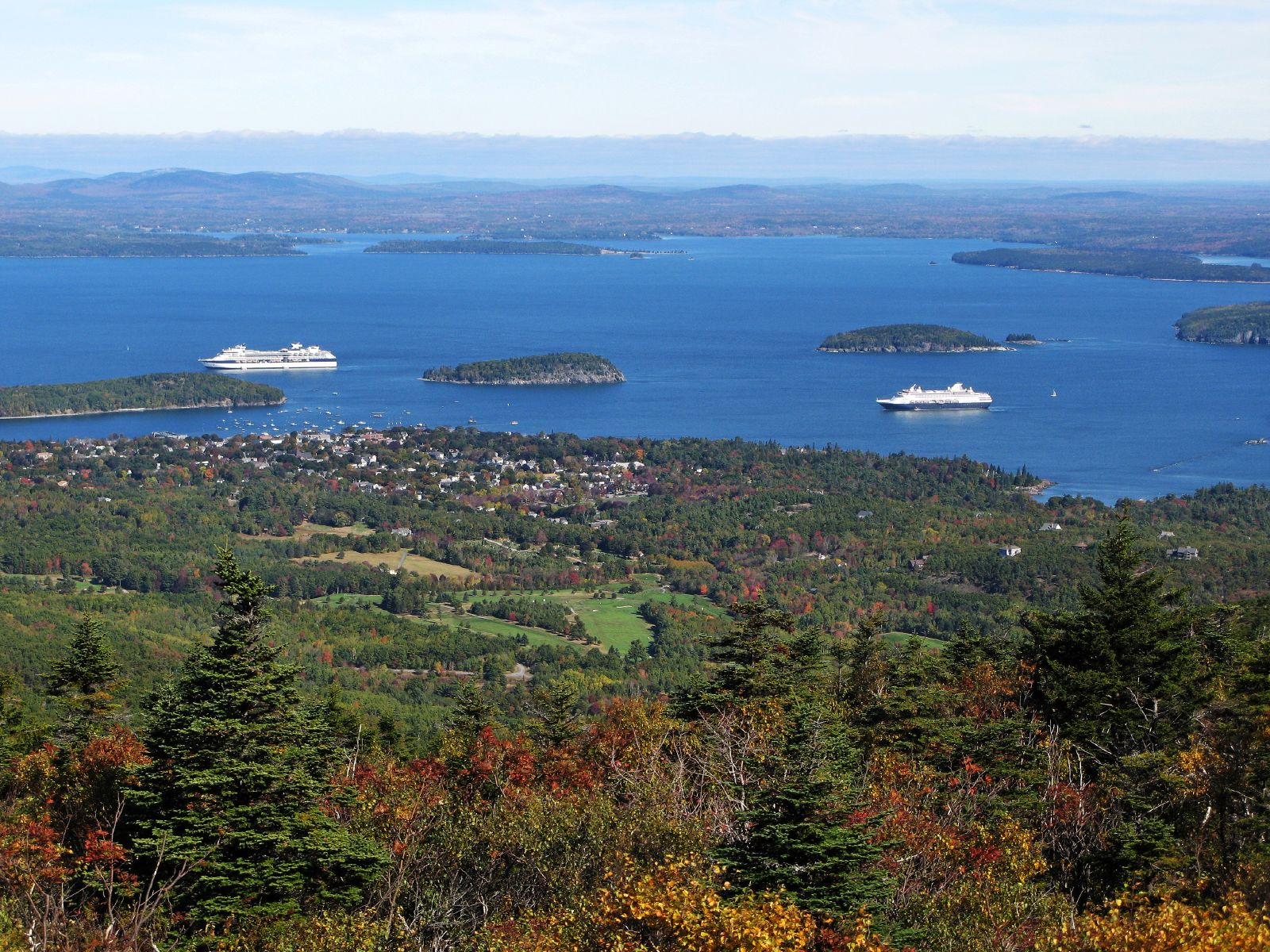
Bar Harbor, Maine and the surrounding geography are too big of a subject for one post, so I will likely revisit this subject again in the future. For now, I'd like to focus on the town of Bar Harbor itself, and the many opportunities it presents for folks wanting to kayak the pristine waters of Frenchman Bay or other nearby waters, or to hike, bike, fish, rockclimb, ride on horseback...a near endless list of outdoor activities.
Bar Harbor and Frenchman Bay
Bar Harbor is the largest town (or village, as the case may be) on Mt. Desert (pron. DEsert or deSERT - either way is acceptable) Island. Mt. Desert Island is home to Acadia National Park, the oldest national park east of the Mississippi. There are several areas that permit boating within the park, which should include kayaking. However, these same areas do not necessarily permit paddle boarding, kite surfing, etc. - so double check with park officials before planning an in-park kayaking trip. You will probably want a wheeled kayak cart with all terrain tires to get your 'yak to the launch point, as parking lots are often not immediately adjacent to the water's edge. You may have to travel via a short trail to get to the water. I personally have not yet paddled within park boundaries, but my inclination is that places like Long Pond and Echo Lake would be prime candidates. Outside the park and surrounding Mt. Desert Island are ocean waters including Frenchman Bay, Eastern Bay, and Somes Sound (once considered a fjord, but now called a fjard). These areas offer a multitude of kayaking trip possibilities, from beginner to advanced - so plan your trip relative to your experience level (see my post Where Should I Paddle? - advice on planning your adventure), or consider joining one of the tours offered by the local kayaking tour businesses. The town of Bar Harbor, as the largest populated area on the island, is a hub for all island activities. It's a great place to start when planning a trip. Some of the island locals will lament the summertime influx of tourists that can cause traffic back-ups in town and a less than sedate atmosphere. However, they also bring a lot of commerce with them that supports local retail, restaurants, and recreation opportunities. If a touristy atmosphere drives you crazy, consider visiting in the spring, or better yet, the fall - when the town is a bit quieter than during the height of summer. Alternatively, you can stay outside of Bar Harbor and head in to town to join a kayaking tour, hop on a boat, rent bikes, etc. The Island Explorer bus line offers shuttle routes to many areas on the island. Accommodations range from campgrounds to cabins to hotels, and sometimes come with package deals that include recreational activities. Food offerings range from local markets and lobster pounds where you can find excellent products to cook yourself, to roadside casual spots, and all the way to upscale dining. The best aspect of Bar Harbor and Mt. Desert Island is the huge variety of things to do, especially in regards to recreation and the outdoors, within a fairly compact geographical area. You can drive across the island in 30-45 minutes, depending on which route you take. The worst part is how long it can take to get there. From my home in northeastern Massachusetts, it's a 6 hour drive if I stick to Rt.95 north to Augusta, then drive east on Rt.3 to Belfast, then coastal Rt.1 north to Ellsworth, then Rt.3 again - this time southeast onto the island. Alternatively, Rt.1 can be driven for a longer stretch with stops available in several of the mid-coast Maine towns like Rockland and Camden. There is an airport, the Hancock County - Bar Harbor Airport, that offers flights via Cape Air, Pen Air, and Jet Blue. I've never used these carriers, so make sure to research flight options thoroughly if this interests you. A location that requires a bit of a journey, even for New Englanders like myself, can be a good thing. It forces you to leave your day to day life behind and encourages you to optimize your visit once you get there. This can result in a memorable trip. Do your research, plan thoroughly, leave some space and time for spontaneous trip alterations, have back-ups in case of inclement weather, give yourself plenty of time to get there...then enjoy. If you haven't been there before, I guarantee you will want to go back. If you have, then you know what I mean. For kayak tours (which I recommend for the less experienced - one of my earliest paddles was on one of these) you can find Acadia Kayak Tours, Coastal Kayaking Tours, and Aquaterra Adventures right in Bar Harbor. There are additional kayak touring companies located elsewhere on the island. If you want to paddle independently, you can rent a kayak which can be dropped at a launch point by the rental company. If you bring your own kayak, make sure you have it fully secured for the long drive, that you will be able to park your vehicle comfortably with your kayak(s) loaded, and that you have fully researched the local paddling conditions. Paddling independently in a strange area can be more risky than going on a tour, so talk to the local experts at the rental companies and ask as many questions as you can. Buy a map, if they have one, to compensate them for their advice. Remember, Maine waters arec-c-cold , so wear appropriate clothing (see my post 8 Tips for Dressing Right for Your Kayaking Adventure).
Sand Beach, Acadia from a mountain top
Whether you plan on lazily relaxing in Bar Harbor, paddling the local waters, or climbing a mountain, you will enjoy your visit and marvel at the natural beauty of the place. Acadia National Park is diminutive by the standards of the vast parks of the West, but it is nonetheless remarkable. This area showcases coastal Maine in all its glory, and gives visitors the opportunity to explore its natural wonders, its fresh seafood, its history, and its hospitality - and I haven't yet mentioned the fresh local beer for aficionados (like myself 😋), with brewers like Atlantic Brewing, and Jack Russell's Steak House & Brewery located right on the island. A cold local beer and some fresh shucked oysters are my little piece of heaven when I'm there. Do yourself a favor, if you haven't visited Bar Harbor and Mt. Desert Island, do so as soon as possible. If you have, go back for more. You'll thank me. - TB on the Water
I have written about safety previously in my post Safety is a Mindset, but I will continue to revisit this topic, as I consider any kayaking related death a tragedy, and possibly preventable. The kayak news feeds I follow are filled with stories of deaths, rescues, injuries, etc. I know, some of this is the nature of "news" itself - if it bleeds, it leads. People are attracted to stories of kayaking deaths the same way we like to read about shark attacks. We can afford to be frightened from a safe distance. That said, there are some trends occurring that I believe could increase the risk of more deaths and injuries. According to a 2016 report from the market research firm NPD, recreational kayak sales increased by double digit percentages during the period of 2014-2016. I wrote about the increasing sale of cheaply made and designed "discount" kayaks in my post The "Kmart Kayaker" - Why More People Are Dying from Paddle Sports . Put these trends together: more kayaks sold, more cheap kayaks purchased - you can postulate a reasonable assumption that many of these kayaks are purchased by inexperienced, possibly out of shape, and possibly uneducated kayakers. Experienced kayakers are not immune to risk either, and that is why I wanted to speak more philosophically about the concept of risk assessment, management and mitigation. I am in the process of reading (for the second time - and well worth it) a book entitled Antifragile written by Nassim Nicholas Taleb., formerly a derivatives trader and risk analysis professional on Wall Street. I encourage anyone to read this book. It is dense and sometimes confounding, but challenging to one's view of risk and the benefits of taking risks. Taleb describes a good risk as being one where the downside is known and limited, but the upside is unknown and unlimited. When I read stories of kayaking deaths and injuries, I often identify the opposite. Folks seem to take enormous risks with their safety for what is probably a limited upside. Granted, you may meet the love of your life on a paddle trip, or the physical activity might have a ripple affect on your health and fitness practices and stave off a chronic disease, both of which have an enormous potential upside. Let's face it, though - most kayak trips are meant to provide exercise, enjoyment, exploration, and possibly adventure. While the amounts of each available on a given trip would be hard to quantify, it is not unrealistic to say they are somewhat known and limited. The downside to an improperly planned trip is unlimited - it's death, and all of the heartache, disruption, and pain that it could bring to your loved ones.
Don't be the guy getting dragged
So, what to do - avoid kayaking? Stay out of the water? Not for me. As the saying goes "I could get hit by a bus tomorrow". Random events are just that - random, and all risk cannot (and should not, in my opinion) be avoided. However, risk can be assessed and mitigated. Is it really worth the experience of solo paddling to that offshore island in February to risk dying? Apparently, for one New Hampshire kayaker it was: story here . For me, it wouldn't be. Look, people are going to die kayaking. They're also going to die falling down a flight of stairs. Not to linger too long on a morbid subject, but I'd rather die in the midst of a supreme adventure then waste away in a nursing home. That said, the upside to that adventure better have damn well been worth it. Because the suffering of my loved ones would be the cost. Read every kayak safety article you can. Take a water rescue class. Make sure you have the right equipment - and possibly more than one of everything. Think of the Navy Seal mantra "two is one and one is none" - those guys know how to mitigate risk. Research where you paddle. Read Safety is a Mindset. Wear your PFD. Look at my About me page - I wear a PFD always when paddling my kayak, and a helmet when surfing my waveski. Be honest with yourself about your fitness and experience level. Do yourself, your loved ones, emergency rescue personnel, and the kayaking community a favor. Properly consider, assess, and mitigate your risk. That way, you'll enjoy kayaking for a long time to come. - TB on the Water
Recently, I went to the beach with my wife and her friend, and spent a few hours lounging on the sand and, primarily, swimming in the relatively warm (65° F is warm for these parts) late July water.There were actually waves big enough to surf, but I'm taking a break from surfing (see my post Why New Hampshire Summer Surfing Sucks) for a bit, and it was fun just to play in the waves and body surf like I did when I was a kid, while my wife and her friend waded in the shallows and talked. I was feeling quite nostalgic as I plunged under the white foam, and tried to catch waves for a ride. I was in the water for a long time, and my mind wandered back to summer days of my youth when I would spend seemingly endless hours in the water at beaches just south of where we currently were. On the drive home, I had a clear vision of a memory that has surfaced from time to time of my sister Debbie, and the summer of 1973.
In the summer of 1973, my father rented an apartment for a week in a ramshackle cottage close to the sand at Salisbury Beach , Massachusetts - just south of the New Hampshire border. It was a new adventure for us. I was 7 years old at the time, and hadn't yet started 2nd grade. I'm sure I had visited the beach at some point on a day trip with my mother, but this was certainly the first time we would be there for days at a stretch. The cottage had a resident basset hound who, although harmless, would howl into the air at us every time we entered the yard through its rickety gate, his clownish ears nearly touching the ground. We showered in a wooden shed fed by a sun warmed water tank on its roof - meant for washing off beach sand, but my parents had us use it even in the cold mornings. I remember the crickets that lived under its wood slat floor. For the week, I was in another world. I played in the sand, splashed in the ocean, ate Kentucky Fried Chicken (a lavish treat for us in those days), and a couple of times was allowed to play at the carnival-like Salisbury center - a few streets populated with arcades, pin ball machines, skee ball, an old wooden roller coaster, and a beach side ferris wheel. When I was tired of the beach, I would chase grass hoppers in the dune grass of the yard. I wasn't fully aware of the reason my father rented that cottage apartment, but I knew it had something to do with my sister Debbie, who suffered from cystic fibrosis - a genetically inherited disease that attacks and degrades the lungs, pancreas, and other organs. Debbie had wanted to be at the beach. She probably didn't count on getting stuck at the top of the ferris wheel for 20 minutes, which happened once. She might not have counted on, although I would imagine she had some notion, this being her one and only stay at the beach. She died the following winter in February of 1974 at the age of 17. We were at this ramshackle cottage in this run down beach side town, because it was all my father could afford - his being awash in medical bills and the costs of raising 4 other children. He must have known this was the time to do what he could to make his daughter happy, because time was running out. The memory I have of Debbie from that week, aside from the ferris wheel incident, that stays with me the longest, and resurfaces in dreams and on days like my recent beach visit, is of me and her in the water together. This was unusual, because Debbie wore a trach (pronounced "trake") - a tube that was inserted through a hole in her throat to assist with breathing. This made water perilous, because any water that entered through this tube would drain straight into her lungs. A year before our beach trip, my father had installed a small above ground pool in our backyard that Debbie loved to go in. She had to stay above water, and if I was in the pool with her, I was admonished not to splash. This was the ocean, though, and we were in it together - Debbie leading me into water deeper than where my feet could touch the bottom. I remember it being the morning, because it was quiet. I remember the water was calm, with gently rolling swells Debbie lifted me over as they passed us. I remember being afraid at first to be in water deeper than I could stand in (I was only 7) but I also remember trusting my sister to keep me safe. The morning sun shimmered on the calm water, and I was in my sister's arms. I have never lived more than an hour's drive from the ocean. Even when I lived for a brief period in southern California, and climbed on a surf board for the first time at Doheny State Beach, it was only a short ride back to Mission Viejo, my temporary home. The ocean has always been somehow in my veins. You could trace that back to the yearly cottage rentals that became a tradition for our family after the first stay with Debbie. You could trace it back to the hours I spent frolicking in the surf or hunting for crabs at low tide. Later, when I took up kayaking and waveski surfing, I had even more reason to to be near, and in, the ocean. I trace it back to the memory of the calm water, the shining sun, and my sister's arms holding me tight. - TB on the Water
I have been reading an alarmingnumber of stories recently regarding the efforts of the Trump administration to roll back Obama administration designations of new public lands - and frankly, to go farther back into previous administrations' additions to our parks and refuges.These efforts have been emboldened by the court victory of Cliven Bundy and his fellow defendants against charges related to their occupation of the Malheur National Wildlife Refuge in Oregon. Closer to home here in the Northeast, the recently designated Katahdin Woods and Waters national monument in Maine has come under scrutiny by the Trump administration, urged on by Maine Governor Paul LePage. I am sympathetic to arguments and opposing opinions regarding the proper use of land resources. I do not think the exploitation of natural resources (logging, hunting, etc) is necessarily a bad thing. The myth that native peoples lived in a wild, untamed Eden before Europeans arrived is just that - a myth. Evidence suggests native peoples burned forests to promote the growth of nut bearing trees, and of berry bearing bushes - and to clear the undergrowth to make movement through the forests and the hunting of game animals drawn to fresh, post-fire plant growth easier. However, I would argue these people had an understanding of the environment far more sophisticated than any arriving European, and certainly a much lighter hand as they worked with natural processes. Here's something I don't understand, however: the land donated for the Katahdin Woods and Waterways national monument was purchased by Roxanne Quimby, co-founder of Burt's Bees, purveyor of "natural" products like their well known lip balm. As far as I am aware, no seller was unduly pressured to sell his or her land, and it was purchased with profits made by an American based business - profits earned in the free and open market in the face of competition. If an American citizen spends her own legally made U.S. dollars on tens of thousands of acres, then decides to gift those acres for a national monument, why is the allegedly small government/free market supporting governor of Maine against that? It seems inconsistent. One might even say hypocritical. A cynical mind might wonder for who's interests the governor is actually working. Certainly, the folks who oppose this national monument could have purchased the land themselves when it was for sale.They didn't. Roxanne Quimby did. Because of that, and her generous gift to our nation, every U.S. citizen can access those lands for purposes of recreation and enjoyment. The very same process of privately purchased lands donated to the nation (in this case via the Hancock County Trustees of Public Reservations) resulted in the development of Acadia National Park on Maine's seacoast. Today, Acadia is an economic engine, driven by tourist dollars, for Mt. Desert Island and surrounding areas - besides being an incredible jewel of natural wonder, offering myriad recreational opportunities, including kayaking (see my post Bar Harbor - Gateway to Outdoor Adventure). In a recent Boston Globe piece discussing the threat to Kathadin Woods and Waterways, David Abel writes:
Environmental groups immediately questioned the president’s legal authority to reverse a previous president’s designation, but the Trump administration has suggested that some of the restrictions on mining, logging, and other commercial and recreational activities have gone too far.
Note the reference to mining and logging restrictions, then ask yourself who is really behind these efforts - and how much money they might be funneling into Political Action Committees and other coffers. If you believe in the idea of lands designated for the use of all citizens, and for the welfare of the animals and environment within them, then let your voice be heard. Because, I can assure you, those on the opposing side with money to spend will surely make sure theirs are heard. - TB on the Water Read the full Boston Globe article here: Environmentalists vow to fight Trump on Maine monument